Short answer
The Habu Port Line is the Oshima Bus route to understand when you want the southern and eastern side of Izu Oshima from Motomachi. Use it for Habu Port, the strata-section area, Suna-no-hama, and several smaller stops, but plan it from the official Oshima Bus timetable PDF on the day you travel.
Last checked: August 21, 2026. Timetables, fare tables, pass prices, payment methods, early-morning ship-connection buses, road conditions, weather, and attraction access can change. Always confirm current details with Oshima Bus, Tokai Kisen, UMISORA, and official local sources before travel.
What the line is for
The Habu Port Line is the south-island branch of Oshima Bus. The Tokyo Sightseeing Accessibility Guide describes it as running from Motomachi toward the strata section and Habu Port. That makes it different from the Oshima Park Line, which is the better mental model for Motomachi, Okata, and Oshima Park.
If your trip is about the dramatic road-side strata, the black-sand Suna-no-hama area, Habu Port, or smaller south-side stops, start here. If your trip is about the airport or Okata Port, first read the broader Oshima Bus guide and then match the line again.
Start at Motomachi, then check the PDF
Oshima Bus sightseeing information lists Motomachi Port as a stop for the Oshima Park Line, Habu Port Line, and Miharayama Line. That makes Motomachi the easy planning base for this route. The official route-bus page checked for this guide showed a timetable period from July 1, 2026 to September 30, 2026 and linked the Habu Line summary timetable PDF, the island map PDF, the route map PDF, and the fare table PDF.
Do not plan from a screenshot or an old blog. Open the official Habu Line PDF and the route map before you decide where to get off. The Tokyo guide says the Oshima Park Line and Habu Port Line run about once per hour, and that route-bus schedules are determined the evening before use. That is useful for expectation-setting, but the official PDF should make the final call.
Good stops to understand
| Stop or area | Why it matters | Planning caution |
|---|---|---|
| Motomachi Port | Main west-side base and Habu Port Line starting point for many visitors | Confirm your ferry actually uses Motomachi that day before building the whole plan around it. |
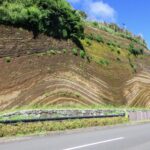
| Strata-section area | The Habu Port Line is the bus branch for the famous exposed geological layers on the south route. | Check the official stop name and walking distance before you go. |
| Suna-no-hama Entrance | Oshima Bus sightseeing information lists Suna-no-hama Entrance on the Habu Port Line. | Black-sand scenery does not mean safe swimming; watch weather and sea conditions. |
| Habu Port | The line’s signature port-side destination on the south-east side. | Check your return bus before walking away from the stop. |
Ship-connection reality
The official Oshima Bus route-bus page says connection buses are prepared for the large passenger ship’s early-morning arrival around 6:00 a.m., including a direction toward Habu Port via Oshima Town Athletic Stadium. It also says the ship arrival time can move, so those bus departure times are not fixed and passengers should go to the bus stop soon after disembarking.
That is a very island-specific rule. If you arrive tired from an overnight ship, do not linger at the terminal assuming a fixed departure minute. Confirm the day’s port, find the bus stop, and ask locally if the connection is unclear.
Fares, passes, and payment
As checked on August 21, 2026, the Oshima Bus official fare section listed a one-day pass at 2,500 yen for adults and 1,250 yen for children, and a two-day pass at 3,800 yen for adults and 1,900 yen for children. The official page listed these passes as valid on all routes, which can make sense if you combine Habu Port Line riding with another line later in the day.
The official FAQ says Suica, PASMO, and similar IC cards cannot be used. It says cash and PayPay are accepted, and that 50 to 500 yen coins and 1,000 yen notes can be changed on the bus. For a relaxed Habu-side plan, carry small yen cash even if you expect to use a pass or PayPay.
How to build a simple Habu day
- Confirm the day’s ferry port and weather before choosing Motomachi as your base.
- Open the official Oshima Bus route-bus page and Habu Line summary timetable PDF.
- Choose one anchor: strata section, Suna-no-hama, Habu Port, or a south-side viewpoint.
- Check the return bus first, especially from Habu Port or a smaller stop.
- Decide whether separate fares or a one-day pass is more practical.
- Carry cash backup and avoid the last possible bus if you must catch a ship.
Where to go next
Use this as the Habu-side branch of the Japan Transport Fan Travel Guide. For the wider bus system, read the Oshima Bus for Ports and Airport Guide. For ferry-port uncertainty, use the Oshima Ferry Return Port Choice Guide. For airport-to-port transfer planning, read the Oshima Airport to Ferry Ports Transfer Guide.
Photo credit
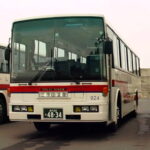
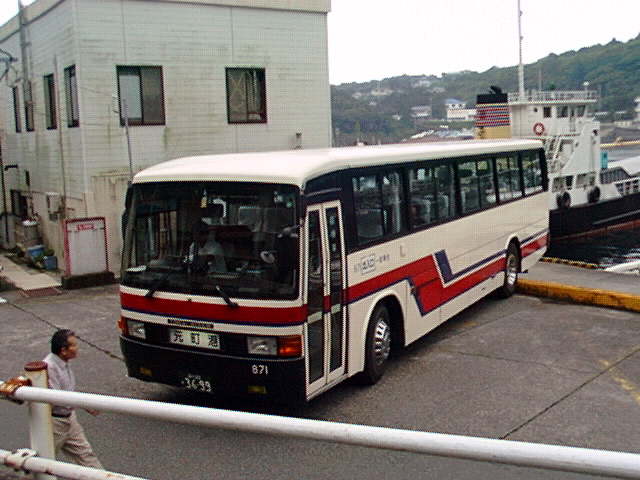
Featured image: Tokai Kisen / Oshima Bus vehicle at Habu Port by Cassiopeia sweet via Wikimedia Commons, public domain. The image may be resized by WordPress for site display; no editorial changes are intended. It is an older bus photo used in editorial transport-guide context and does not imply current vehicle assignment, current bus livery, current stop layout, current service, or endorsement by the creator, Wikimedia, Oshima Bus, Tokai Kisen, Tokyo Metropolitan Government, UMISORA, Oshima Tourism Association, or island communities.
Sources
- Oshima Bus official route-bus page
- Oshima Bus Habu Line summary timetable PDF
- Oshima Bus route-bus timetable and island map PDF
- Oshima Bus route map PDF
- Oshima Bus fare table PDF
- Oshima Bus official FAQ
- Oshima Bus sightseeing and stop information page
- Tokyo Sightseeing Accessibility Guide Oshima traffic page
- Oshima Tourism Association transportation page
- UMISORA English Oshima bus timetable FAQ
- Wikimedia Commons image file and license record
Editorial disclosure: This is an independent planning guide. It is not affiliated with Oshima Bus, Tokai Kisen, Tokyo Metropolitan Government, UMISORA, Oshima Tourism Association, Wikimedia, the image creator, or island communities.