Oshima Kasamatsu Coastal Plants by Bus Guide
Short answer: Add Kasamatsu if you want the Oshima coastal trail to be about protected seaside plants, not only sea views. Plan it as a careful observation stop by bus, keep to the official path, and treat the national natural monument area as something to look at without stepping into it.
Last checked: August 21, 2026. Trail closures, protected-area rules, weather, sea conditions, seasonal flower timing, bus timetables, fares, pass sales, and payment rules can change. Always check official pages before travel.
Why Kasamatsu Matters
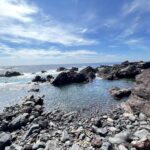
The official Tokyo Oshima Branch hiking page says the Kasamatsu seaside plant community was designated a national natural monument in 1951. It describes a plant cross-section that starts near the sea, where Juniperus lutchuensis covers about 20 meters inland from the shore, mixed with coastal plants such as Lilium maculatum and Chrysanthemum pacificum.
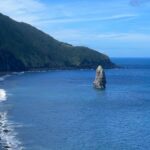
Farther inland, the same official page describes shrubs including Japanese cheesewood, Rhaphiolepis umbellata, and hydrangea, then a transition toward pine and evergreen broadleaf trees. Tokyo’s English Oshima Park page also highlights the coastal trail’s blue sea, wild reefs, and seaside plant communities.
How To Visit Without Hurting The Place
Kasamatsu is best understood as a protected habitat, not a photo prop. Stay on the path, do not step into plant communities, do not pick flowers, do not move rocks, and do not make a new shortcut for a closer angle. The value of the stop is seeing how plants survive wind, salt, and exposed coastal ground.
Seasonal flowers are a bonus, not a promise. The Tokyo Oshima Branch page mentions coastal flowers around the broader Senzu-side route, including hydrangea and Hemerocallis littorea in early summer, leopard plant in autumn, and rocky-shore flowers near Matsuzaki. Build the walk around observation, not a guaranteed bloom list.
Bus-Based Planning
The full Senzu coastal path runs about 5.5 km from Nihonmatsu in Senzu to Gyoja Tunnel and takes 2 to 3 hours because of ups and downs, according to Tokyo Oshima Branch. If your target is Kasamatsu plant observation, decide in advance whether you are approaching from the Senzu side, the Oshima Park side, or using the trail only as a partial walk.
The same official page says walkers can move by bus between Senzu and Oshima Park if they exit to the island road. Tokyo’s English Oshima Park page says travelers can take a bus from the airport or harbor to Oshima Park bus stop. That makes Kasamatsu a better plan when you have a clear exit, a visible return-bus window, and enough daylight to slow down.
Money And Timing
When checked, the Oshima Bus route-bus page showed a timetable period from July 1, 2026 to September 30, 2026. It listed a one-day pass at 2,500 yen for adults and 1,250 yen for children, and a two-day pass at 3,800 yen for adults and 1,900 yen for children, valid on all routes.
The Oshima Bus FAQ says Suica, PASMO, and other IC cards are not accepted. Cash and PayPay are accepted, and on-bus change is available only for 50 to 500 yen coins and 1,000 yen notes. Carry small cash, because a plant walk becomes stressful fast if the last leg depends on payment improvisation.
Best Fit
- Choose this if you enjoy plant observation, natural monuments, and slow coastal walking.
- Skip it if you mainly want a quick viewpoint or rough-sea drama.
- Keep distance from protected plants and unstable coastal edges.
- Turn back early if wind, rain, footing, or return-bus timing feels poor.
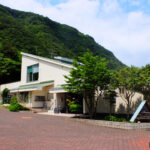
- Use Oshima Park, Camellia Museum, or nearby indoor stops as weather backups.
Sources
- Tokyo Oshima Branch official hiking course page
- Tokyo Bureau of Environment English Oshima Park page
- Oshima Bus route-bus page
- Oshima Bus FAQ
- Izu Oshima Photo Studio source image and terms
Editorial disclosure: This guide was prepared from official Tokyo, transport, and source-image pages checked on August 21, 2026. Trail closures, protected-area rules, weather, sea conditions, seasonal flower timing, route-bus timetables, fares, pass sales, payment rules, and facility notices can change, so check official pages before travel.