Make Takamatsu Airport a Shikoku aviation stop
Short answer: Takamatsu Airport works well for aviation fans when you keep the plan official and flexible: use the 3F observation deck, enjoy Seto Inland Sea and Sanuki Plain views when weather allows, then connect by limousine bus, rental car, or taxi toward Takamatsu city, Kotohira, or another Kagawa plan after current checks.
Last checked: August 21, 2026. Observation-deck hours, closures, flight status, bus timetables, fares, parking, rental-car counters, shops, restaurants, payment rules, road conditions, weather, and events can change. Always confirm current details on official Takamatsu Airport, airline, bus, rental-car, taxi, and destination pages before you go.
Choose your first Takamatsu Airport plan
| Plan | Best for | How to keep it practical |
|---|---|---|
| Short observation-deck stop | Aviation fans with an arrival, departure, or spare airport hour | Use the official 3F deck first, then return indoors before check-in, baggage, boarding, or bus timing becomes tight. |
| Takamatsu city connection | Travelers heading between the airport and central Takamatsu | Check the airport limousine bus page because the official access page warns that timetables may change every month. |
| Kagawa onward day | Visitors considering Kotohira, Ritsurin Garden, udon stops, or a rental-car plan | Add the side trip only when luggage, flight timing, road conditions, and the return route all leave enough slack. |
Why Takamatsu Airport works for aviation fans
Takamatsu Airport gives visitors a clear official viewing anchor. The airport’s observation-deck page describes the deck as a place where you can see aircraft up close, and it also points to views of the Seto Inland Sea and the Sanuki Plain. That combination makes the airport useful for more than a simple departure: it can become a small Shikoku transport moment inside a real itinerary.
The same official page places the deck on 3F, currently lists admission as free, and gives a current hours snapshot. Just as important, it says opening hours may change according to aircraft operating conditions, and that the deck is closed during strong wind, typhoon, and similar conditions. Treat the deck as an official public feature, but never as a guaranteed fixed-time attraction.
Use the terminal as your buffer
The official floor map makes the terminal easy to use by level. The 3F includes the observation deck, restaurants, prayer room, and shop or service listings. The 2F includes departure areas, domestic and international boarding waiting rooms, shops, restaurants, information, and service facilities. The 1F includes check-in and arrival areas, information, a bus ticket machine, rental-car reception counters, lockers, a convenience store, currency exchange / ATM, and other services.
That means a simple aviation stop can stay practical. After arrival, decide whether the deck, food, luggage, or bus timing fits the day. Before departure, leave enough room for check-in, security, shopping, weather changes, and flight updates. Floor information is useful for orientation, but tenant hours and service details should still be checked on the latest official pages.
Stay in official public spaces
For this guide, the recommended aviation area is the terminal and the official observation deck. Do not build a plan around fences, airport roads, service routes, private land, restricted zones, or drones. A calm aviation day should add aircraft, landscape, and terminal time to the trip without disturbing passengers, residents, staff, or airport operations.
This is especially important when the weather is windy, when flights are delayed, or when buses are crowded after arrivals. If conditions change, let the airport become a practical transfer point rather than forcing a spotting plan.
Use limousine buses with current checks
The official access page lists limousine-bus route headings between Takamatsu Airport and places such as JR Hotel Clement Takamatsu, Takamatsu Station, Kencho-dori, Ritsurin Park, Yume Town Takamatsu, Busshozan Station, and Kotohira. Those headings are useful for deciding whether the airport can connect with your larger Kagawa plan.
However, the same access page warns that limousine-bus timetables may change every month and tells users to check the official website for the latest information. Use the airport page to identify the direction, then confirm the latest timetable, fare, platform, payment rules, full-seat risk, and last return option close to travel.
Use car and rental-car plans as flexible tools
The official access page gives car-time snapshots in normal conditions, including access to Takamatsu Expressway Takamatsu-Nishi IC or Fuchu Smart IC, central Takamatsu, and Kotohira. It also notes parking information, including 24-hour parking operation. Those details are helpful, but airport timing, weather, road conditions, and event traffic can change the real day quickly.
If you plan to rent a car, the official access page lists rental-car reception counters on 1F and directs users to each company for service contents, price, applications, and inquiries. Confirm the office, pickup and return method, hours, insurance, child seats, winter or storm conditions, and luggage fit before making the car the center of the itinerary.
Add Kagawa stops only with time
Takamatsu Airport can pair naturally with Takamatsu city, Ritsurin Garden, Kotohira, udon travel, or wider Shikoku routing. Still, nearby does not mean automatic. If your flight day is tight, the best airport plan may be deck, meal, bus, and hotel.
If you have more time, choose one add-on and make it real. A garden visit, city meal, or Kotohira direction can work better than trying to turn the airport day into a full Kagawa checklist. Leave room for weather, luggage, bus frequency, parking, and the last reliable return.
What to check before you go
- Official Takamatsu Airport notices, flight status, 3F observation-deck hours, and weather closures.
- Limousine-bus timetable, fare, payment method, stop location, monthly revisions, and last return option.
- Terminal floor information, shop and restaurant hours, lockers, charging, prayer room, and service counters.
- Rental-car counter hours, pickup and return rules, parking, road conditions, and storm or event disruptions.
- Takamatsu city, Ritsurin Park, Kotohira, udon, ferry, rail, or hotel timing if you leave the airport area.
Where this fits in the transport hub
Takamatsu Airport belongs in the airport-area branch of the Japan Transport Fan Travel Guide. If you are comparing Shikoku and western Japan airport days, also see Matsuyama Airport Area Guide for Aviation Fans, Hiroshima Airport Area Guide for Aviation Fans, and Plane Spotting in Japan Airports for First-Time Visitors.
Photo credit
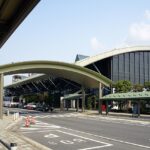
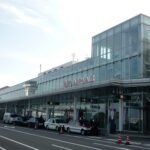
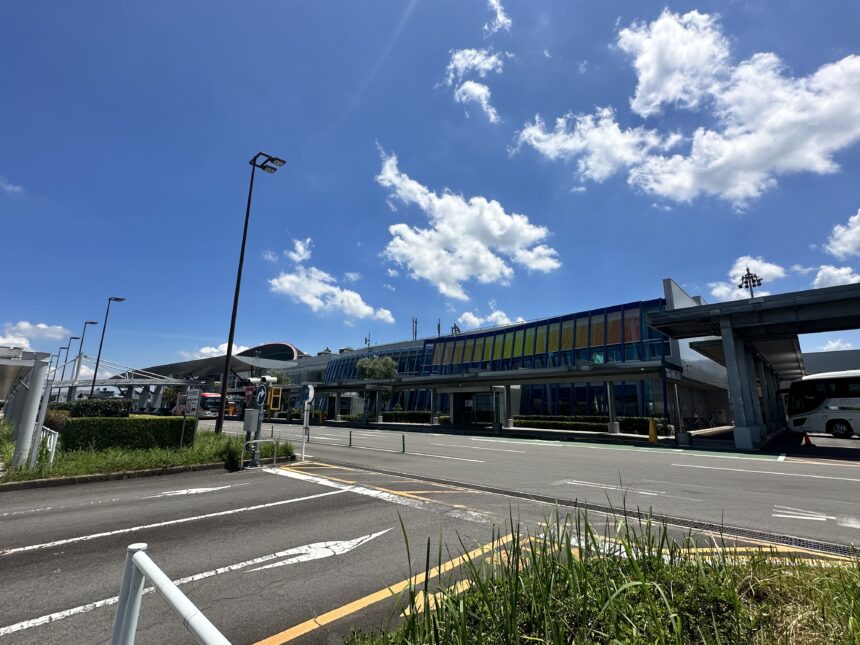
Featured image: Takamatsu Airport exterior by Wikimedia Commons user JunP, CC0 1.0 Public Domain Dedication. Cropping or resizing may be applied for site display. The image is used in editorial Takamatsu Airport aviation-travel-guide context and does not imply endorsement by Takamatsu Airport Co., Ltd., airlines, bus operators, rental-car companies, Wikimedia, or the creator.
Sources
- Takamatsu Airport: Observation Deck
- Takamatsu Airport: Floor Map
- Takamatsu Airport: Access
- Wikimedia Commons image file and license record
Editorial disclosure: This is an independent planning guide. It is not affiliated with Takamatsu Airport Co., Ltd., airlines, bus operators, rental-car companies, nearby destinations, Wikimedia, or the creator.