Make Izumo Airport a calm San’in aviation stop
Short answer: Izumo Enmusubi Airport works best for aviation fans as a compact official-area stop: use the 3F send-off deck, enjoy the Lake Shinji and mountain views when weather allows, then connect by airport bus or car toward Izumo, Matsue, Izumo Taisha, or other Shimane plans with current checks.
Last checked: August 21, 2026. Send-off deck access, building hours, flight status, airport buses, fares, payment methods, rental-car counters, shops, restaurants, road conditions, parking, weather, and local events can change. Always confirm current details on official Izumo Airport, airline, bus, rail, rental-car, and destination pages before you go.
Choose your first Izumo Airport plan
| Plan | Best for | How to keep it practical |
|---|---|---|
| Short deck stop | Aviation fans with an arrival, departure, or easy spare hour | Use the official 3F send-off deck first, then return indoors before baggage, boarding, or bus timing becomes tight. |
| Izumo or Matsue connection | Travelers using the airport as a San’in gateway | Check the airport-bus page and the relevant operator page before relying on any time, fare, or payment snapshot. |
| Izumo Taisha add-on | Visitors with generous time and a clear return plan | Treat the shrine as a cultural visit with its own manners, access checks, and unhurried timing, not as a quick airport checklist item. |
Why Izumo Airport works for aviation fans
Izumo Airport gives plane watchers a clear official anchor. The airport’s send-off deck page says visitors can see aircraft taking off, landing, and parked aircraft up close. It also notes wide views toward Lake Shinji, Matsue city, Mount Daisen, and Mount Sanbe, which makes the deck more than a narrow runway viewpoint when the weather is good.
The same official page places the send-off deck on the 3F of the terminal building, says use follows building opening hours, and lists admission as free. It also warns that the deck may not be available in bad weather. That is the right mindset for this airport: plan the deck as a public, flexible highlight, not as something guaranteed at a fixed hour.
Use the terminal as your buffer
The official floor map is helpful because the airport is easy to understand by level. The 3F is the observation-deck and restaurant level. The 2F is the departure-lobby and shop level, with boarding waiting areas, airport shops, mobile charging, a lounge, and nursing-room facilities listed by the airport. The 1F is the arrival-lobby and ticket-counter level, with the information counter, coin lockers, bus ticket machine, cash corner, rental-car reception, accessible parking, a convenience-store satellite, and a calm-down space listed on the floor map.
That structure makes a simple aviation stop workable. After arrival, decide whether your luggage, bus timing, food, or weather makes the deck realistic. Before departure, keep enough time for check-in, security, shopping, and any sudden flight or weather updates. Terminal services, tenants, and operating hours are still high-update, so use the floor map for orientation and the latest official pages for same-day decisions.
Stay in official public areas
For this guide, the recommended aviation area is the terminal and official public deck. Do not make airport fences, service roads, private land, restricted zones, or drone viewpoints part of the plan. A good airport day should add a quiet aircraft moment to the trip without creating problems for residents, airport staff, other passengers, or flight operations.
This matters even more at a regional airport, where small changes in flight timing can affect buses, taxi demand, rental-car pickup, and terminal flow. Keep the plan simple: deck, terminal, transport, then the next destination.
Use airport buses with current checks
The airport’s public-transport page says airport buses departing Izumo Airport leave 10 minutes after each flight arrival, after baggage claim is completed. It also says airport connection buses may be suspended if flights are cancelled because of weather, and that there are no seat reservations. Those details are useful, but they are exactly the kind of details you should re-check before travel.
The airport identifies Matsue Ichibata Kotsu for the Matsue direction and Izumo Ichibata Kotsu for the Izumo direction. It also says bus tickets should be bought before boarding at the 1F domestic-arrival-lobby ticket machine. The airport currently lists fare and time snapshots for places such as JR Matsue Station, Matsue Shinjiko Onsen Station, JR Izumoshi Station, Izumo Taisha, and Tamatsukuri Onsen. Use those pages to choose the direction, then confirm the latest timetable, fare, full-seat risk, and payment rules with the airport and operator pages.
Use car access as orientation, not a promise
The official access page places Izumo Airport at 2633-1 Okinosu, Hikawa-cho, Izumo, Shimane. It gives car-time snapshots for directions such as Izumo city, Izumo Taisha, Matsue city, Unnan, Oda, and Yasugi, while warning that travel times depend on road conditions. That warning is important in practice because airport timing, weather, parking, and rural road conditions can change the feel of a day quickly.
If you plan to rent a car, read the airport’s rental-car notes carefully. The public-transport and rental-car page lists counters in the terminal but says rental-car staff may not be stationed at the counters, and same-day users may need to call from fixed phones at the counters. Confirm the office, pickup method, return method, hours, and winter or weather conditions with the rental company before treating a car plan as easy.
Add Izumo Taisha with respect and time
Izumo Taisha is one of the area’s major cultural destinations, and the airport can be a useful gateway for travelers heading that way. Still, it should not be treated as a quick decorative add-on to an airport visit. Give it enough time for transport, walking, shrine manners, crowds, weather, and the return trip.
If your real goal is aircraft, keep Izumo Taisha for a separate half day or a relaxed onward plan. If your real goal is the shrine, use the airport deck only when it fits naturally before or after the cultural visit.
What to check before you go
- Official Izumo Airport notices, flight status, building hours, and 3F send-off deck availability.
- Airport-bus timetables, operator notices, fares, payment methods, seat rules, and weather-related suspensions.
- Terminal floor information, shop and restaurant hours, coin lockers, luggage needs, and lounge or charging availability.
- Rental-car counter staffing, pickup and return rules, parking, road conditions, and winter or storm disruptions.
- Izumo, Matsue, Izumo Taisha, hot-spring, rail, and return-route timing if you leave the terminal area.
Where this fits in the transport hub
Izumo Airport belongs in the airport-area branch of the Japan Transport Fan Travel Guide. If you are comparing regional airport days, also see Yonago Airport Area Guide for Aviation Fans, Hiroshima Airport Area Guide for Aviation Fans, and Plane Spotting in Japan Airports for First-Time Visitors.
Photo credit
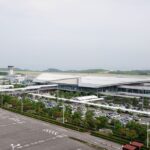
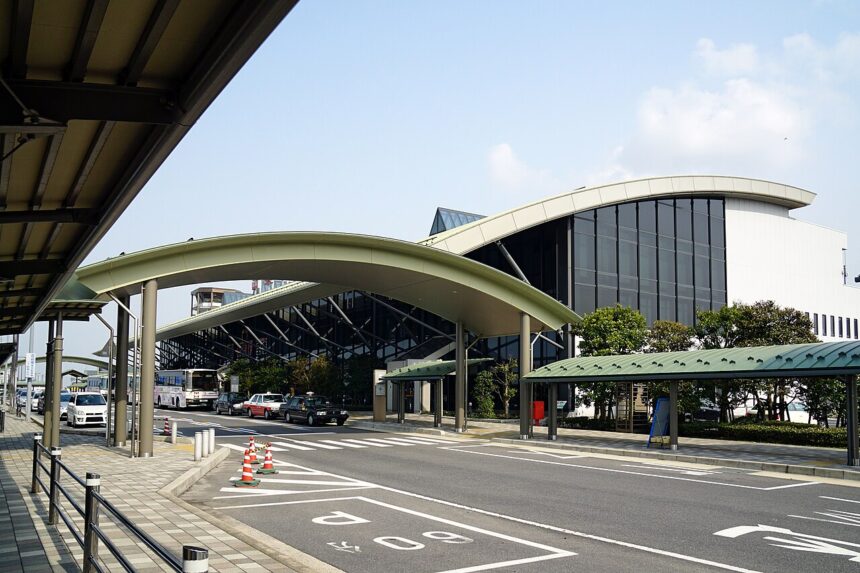
Featured image: 150322 Izumo Airport Izumo Shimane pref Japan01s3.jpg by 663highland on Wikimedia Commons, CC BY 2.5. Cropping or resizing may be applied for site display. The image is used in editorial Izumo Airport aviation-travel-guide context and does not imply endorsement by IzumoAirport Terminal Building Co., Ltd., airlines, bus operators, rail operators, rental-car companies, Wikimedia, or the creator.
Sources
- Izumo Airport: Send-Off Deck
- Izumo Airport: Floor Map
- Izumo Airport: Public Transport and Rental Car
- Izumo Airport: Access
- Wikimedia Commons image file and license record
Editorial disclosure: This is an independent planning guide. It is not affiliated with IzumoAirport Terminal Building Co., Ltd., airlines, bus operators, rail operators, rental-car companies, nearby destinations, Wikimedia, or the creator.