Make Tokushima Awaodori Airport a flexible aviation stop
Short answer: Tokushima Awaodori Airport works well for aviation fans who want an official, low-friction Shikoku airport stop. Build the plan around the 3F observation hall, then choose a current-check connection toward Tokushima Station, Naruto, a taxi reservation, or a rental car only after confirming flight timing, transport, and weather.
Last checked: August 21, 2026. Observation-hall access, terminal hours, flight status, bus timetables, fares, payment methods, parking, taxi availability, rental-car counters, lockers, shop and restaurant hours, road conditions, weather, festivals, and events can change. Always confirm current details on official Tokushima Awaodori Airport, airline, bus, taxi, rental-car, and destination pages before you go.
Choose your first Tokushima airport plan
| Plan | Best for | How to keep it practical |
|---|---|---|
| Observation-hall stop | Aviation fans with an arrival, departure, or spare airport hour | Use the official 3F observation hall first, then return indoors before baggage, boarding, bus, or taxi timing becomes tight. |
| Tokushima Station connection | Travelers heading between the airport and central Tokushima | Check the official limousine-bus page and operator timetable before relying on any arrival connection, fare, payment method, or last return. |
| Naruto or coastal add-on | Visitors considering Naruto Station, Naruto Park, the museum area, or a rental-car route | Add only one side plan unless you have a generous buffer for luggage, road conditions, parking, weather, and the return route. |
Why Tokushima Awaodori Airport works for aviation fans
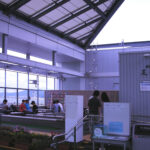
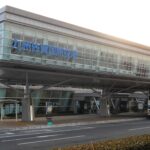
The official 3F floor guide gives Tokushima Awaodori Airport a clear aviation anchor: a free observation hall on the departure-lobby level. The airport describes it as an all-weather observation space on a fixed bridge where visitors can see aircraft and ground work up close. That makes it more usable than a weather-dependent outside-only viewpoint.
This is not a guide to chasing perimeter spots. For a first visit, the strongest plan is simple: use the terminal, watch from the official public viewing area, check the next transport, and keep the rest of the day flexible. That is especially useful at a regional airport where a small delay can change the whole rhythm of a city or Naruto plan.
Use the terminal as your buffer
The official 1F floor guide places the arrival lobby and check-in counter on the first floor. It lists the general information desk, rental-car counter, ATMs, lockers, breastfeeding room, convenience store, bus-ticket vending machine, currency exchange, Wi-Fi rental, multipurpose toilet, and elevator. For travelers with luggage, this floor is the practical reset point before deciding what comes next.
The 3F floor guide adds shops, restaurants, lounge facilities, charging, massage chairs, accessible facilities, and the observation hall. If your flight timing is tight, use the terminal as a compact airport experience: arrival floor, information, observation hall, food or coffee, and then transport. That is a stronger plan than forcing a rushed sightseeing branch.
Stay in official public spaces
For this guide, the recommended aviation area is the terminal and official observation hall. Do not build the day around fences, airport service roads, private land, port or industrial areas, restricted zones, or drones. A good airport-area guide should add aircraft, sky, and movement without creating problems for passengers, residents, staff, or operations.
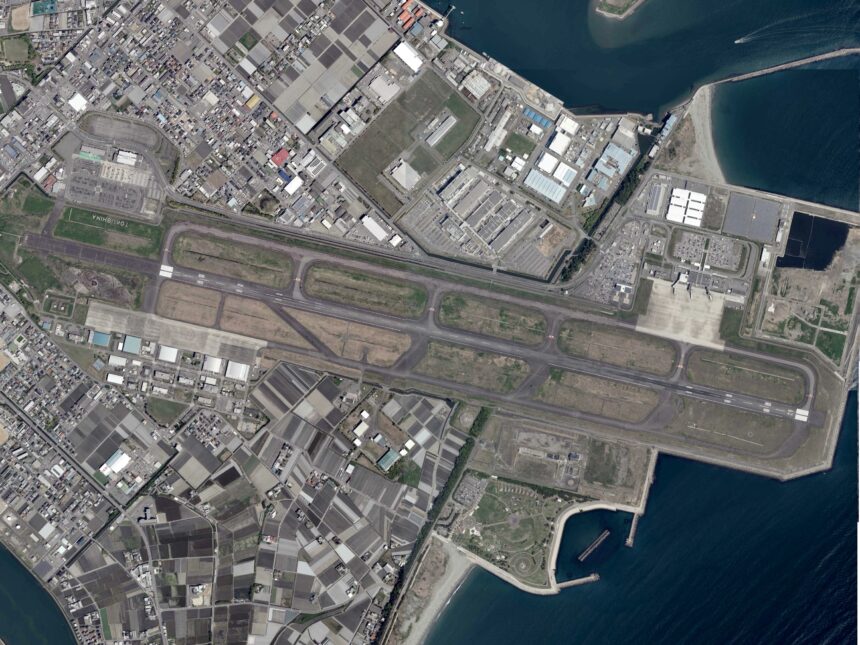
The aerial view of the airport area can make the surroundings look tempting, but a map is not permission. Keep the aviation portion inside public airport areas, and treat any nearby road, waterfront, or facility as separate local access that must be legal, public, and safe.
Use the limousine bus with current checks
The official limousine-bus page describes the Tokushima Station connection as tied to arrival flights. It says arrival buses are scheduled around aircraft arrival, that delayed arrivals can affect departure, and that the bus leaves after customer confirmation from the arrival exit. It also states that seats cannot be reserved and that the bus leaves when fully occupied.
Those details are useful, but they also show why this page must be checked close to travel. Before relying on the bus, confirm the current timetable, fare, payment method, stop, full-bus fallback, and last return. If the limousine bus is full or timing does not work, the official page points travelers toward taxi or city bus alternatives.
Use taxi and rental-car plans carefully
The airport’s taxi page is unusually direct: it asks travelers to reserve in advance because waiting taxis are often short, while also noting that a company may not always be able to accept a reservation. It also lists example routes to Tokushima Station, Naruto Station, Naruto Park, and Matsushige Highway bus terminal, with a clear warning that fares and times vary by route and traffic.
That makes taxi a useful backup only if you plan it seriously. For rental cars, the 1F guide places the counter in front of the arrival gate and lists companies at the airport. Confirm office hours, pickup and return location, insurance, child seats, luggage fit, parking, road conditions, and fuel before making a car the center of the day.
Add Naruto or Tokushima city only when the timing works
Tokushima Station is the cleanest central connection because it is the focus of the limousine-bus page. Naruto can also make sense for travelers who have already confirmed current bus, taxi, or car timing, but it should not be treated as an automatic add-on after every flight. The city-bus and taxi details can change, and traffic or event periods can alter the schedule.
A compact aviation day might be airport observation hall, Tokushima Station, and one meal or walk. A Naruto or coastal branch deserves a wider buffer, especially if you are carrying luggage or need to return to the airport the same day. Let the official transport pages decide the size of the plan.
What to check before you go
- Official Tokushima Awaodori Airport notices, flight status, terminal hours, and observation-hall access.
- Limousine-bus timetable, fare, payment method, bus stop, full-bus risk, delay handling, and last return option.
- City-bus details if using Naruto, museum-area, or local routes instead of the airport limousine bus.
- Taxi reservations, current availability, estimated fare, route, traffic, and backup transport.
- Rental-car counter hours, pickup and return rules, insurance, road conditions, parking, weather, and event disruptions.
Where this fits in the transport hub
Tokushima Awaodori Airport belongs in the airport-area branch of the Japan Transport Fan Travel Guide. If you are comparing Shikoku airport days, also see Matsuyama Airport Area Guide for Aviation Fans, Takamatsu Airport Area Guide for Aviation Fans, Kochi Ryoma Airport Area Guide for Aviation Fans, and Plane Spotting in Japan Airports for First-Time Visitors.
Photo credit
Featured image: Tokushima Airport aerial photograph by Wikimedia Commons user Bruno Plus, based on Geospatial Information Authority of Japan public data, CC BY 4.0. Cropping or resizing may be applied for site display. The image is used in editorial Tokushima Awaodori Airport aviation-travel-guide context and does not imply endorsement by the creator, Wikimedia, GSI, Tokushima Awaodori Airport, Tokushima Air Terminal Building Co., Ltd., airlines, bus operators, taxi companies, or rental-car companies.
Sources
- Tokushima Awaodori Airport: 3F floor guide
- Tokushima Awaodori Airport: 1F floor guide
- Tokushima Awaodori Airport: access and parking
- Tokushima Awaodori Airport: limousine bus
- Tokushima Awaodori Airport: taxi
- Wikimedia Commons image file and license record
Editorial disclosure: This is an independent planning guide. It is not affiliated with Tokushima Awaodori Airport, Tokushima Air Terminal Building Co., Ltd., airlines, bus operators, taxi companies, rental-car companies, nearby destinations, Wikimedia, GSI, or the creator.