Decide whether you want shodo or shakyo
Short answer: a calligraphy experience in Japan can mean shodo, the art of writing characters with brush and ink, or shakyo, the careful copying of Buddhist sutras. First-time visitors should choose by format, language support, posture, tools, ink, drying time, photography rules, and whether the finished work can be taken home.
Last checked: August 28, 2026. Class availability, language support, tools, age limits, location rules, photography, and take-home options vary by operator or temple. Confirm the current official page before booking.
What shodo is
JNTO describes shodo as one of Japan’s traditional arts, alongside tea ceremony, flower arranging, and bonsai. Calligraphy can be seen throughout Japan, from storefronts and schools to temples, museums, and public displays. Different writing styles, ink shades, and brush movements create different effects.
For travelers, the value is not only the final sheet of paper. A good beginner session helps you understand brush pressure, stroke order, spacing, negative space, and the rhythm of writing slowly.
Shodo, shakyo, or craft workshop?
| Format | Best for | Check first |
|---|---|---|
| Shodo class | Learning brush movement and writing a character or phrase | Language, examples, tools, drying time, and take-home rules |
| Shakyo sutra copying | A quiet temple-based practice of attention | Temple etiquette, religious setting, posture, and photography |
| Craft-style workshop | Families or travelers who want a souvenir activity | Age rules, ink stains, packaging, and shipping |
| Museum or temple viewing | Travelers who prefer observation to participation | Opening hours, exhibit rules, and photography restrictions |
Language and instruction
JNTO recommends researching classes with English-speaking instructors if you want to join a class. Do not assume that every cultural facility can explain stroke order, character meaning, or tool handling in English. A visual demonstration may still be enough for a simple beginner session, but it is better to know that before payment.
If you want to write your name, a word, or a phrase, ask whether the instructor can prepare appropriate characters. Names and concepts do not always translate neatly into one beautiful kanji.
Posture, ink, and clothing
Some classes use tables and chairs. Others may use tatami, low desks, or temple rooms. Ask about seating if kneeling or sitting on the floor is difficult. Wear clothing that can tolerate a small ink accident, and avoid long loose sleeves that may drag across the paper.
Ink may need time to dry. If the finished work must travel in a suitcase, ask whether the operator provides a folder, tube, or protective packaging. If the piece is large or mounted, ask whether shipping is available.
Photography and respect
JNTO’s responsible photography guidance advises asking permission before photographing people and following facility restrictions. This matters in calligraphy classes because instructors, other guests, temple rooms, and private facilities may be visible. Ask before filming the instructor’s hand movements or posting other participants online.
At temples, shakyo should be treated as a quiet practice, not only as a souvenir. Follow signs, keep your phone silent, and avoid photographing restricted areas. First-time visitors can prepare with Buddhist Temple Etiquette in Japan for First-Time Visitors.
Where it fits in a trip
Calligraphy works well as a short indoor cultural activity, especially on a rainy day or between temple, garden, and tea stops. It is also a good fit for travelers who want a calm activity without eating, drinking, or intense movement. Families should ask about age limits and whether children will use real ink or simplified materials.
For the wider activity map, start with Hands-On Cultural Experiences in Japan. If you want a broader making-focused session, compare with Pottery and Craft Workshops in Japan. If you want a more religious temple practice, compare with Zen Meditation in Japan or Temple Stay in Japan.
Who should choose this activity?
Choose calligraphy if you want a quiet, low-movement cultural activity that still feels hands-on. It can work well for solo travelers, couples, families, and older travelers when the room setup is comfortable. It may be a poor fit if the group wants fast entertainment, dislikes sitting still, or needs every instruction translated in detail.
Booking checklist
- Is the activity shodo, shakyo, a craft workshop, or observation?
- Is English instruction available, or is the lesson mainly visual?
- Are tools, paper, ink, apron, folder, or shipping included?
- Can guests choose a character, name, phrase, or prepared sample?
- Will the work be dry enough to carry afterward?
- Are photos or videos allowed inside the room?
Photo credit
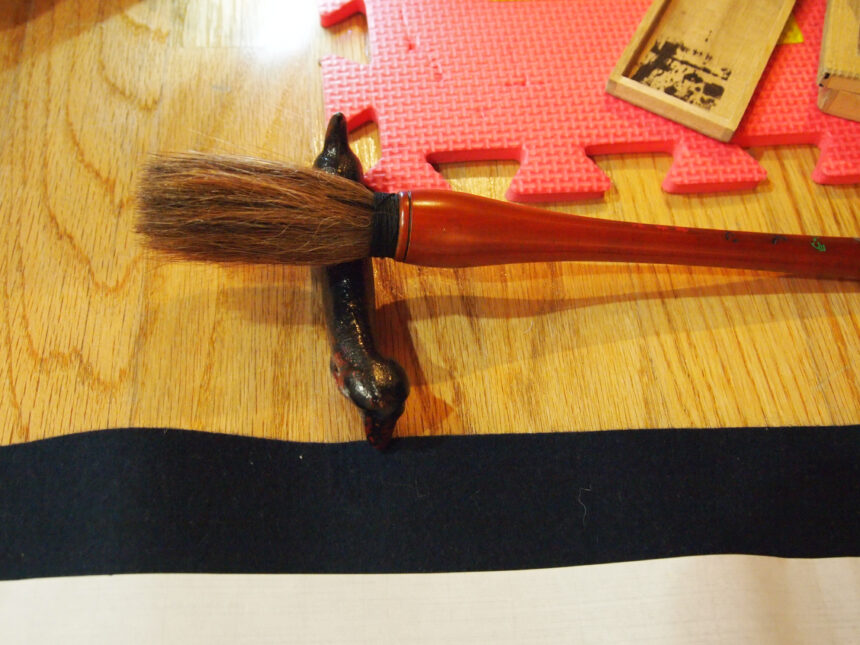
Featured image: Japanese Calligraphy Brush by Ph0kin on Wikimedia Commons, licensed under CC BY-SA 3.0. The credit identifies the source image only and does not imply endorsement by the creator, Wikimedia Commons, any teacher, temple, school, workshop, operator, or cultural organization.
Sources
- JNTO: Guide to Japan’s Cultural Heritage
- JNTO: Zen Buddhism and Meditation in Japan
- JNTO: Experiences in Japan
- JNTO: Responsible Photography in Japan
- JNTO: FAQ
Editorial disclosure: This is an independent planning guide. It does not rank, sell, or guarantee any calligraphy class, temple practice, instructor, facility, artwork, or booking outcome.