Choose the format before you book
Short answer: a good kendo experience in Japan is not simply a chance to swing a bamboo sword. For first-time visitors, the safer choice is a clearly beginner-friendly session with instructor supervision, suitable protective gear, an explanation of etiquette, enough changing time, and a realistic level of physical intensity.
Last checked: August 28, 2026. Availability, language support, age limits, protective gear, safety rules, photography permissions, and cancellation terms can change. Confirm the current operator page before booking.
What kendo is
The All Japan Kendo Federation describes kendo as an athletic contest in which practitioners wear kendo-gu protective armor and use shinai bamboo swords. It also defines kendo as budo, a martial way that develops mind, body, and character through continued keiko, or practice.
That second part matters for travelers. A visitor lesson may be short and beginner-oriented, but it still takes place inside a culture of etiquette, disciplined movement, and respect for partners. Treat it as a guided introduction to a living martial art, not as a costume photo session or a casual sword game.
Five beginner formats
| Format | Best for | Check first |
|---|---|---|
| Observation | Travelers who want cultural context without physical contact | Visitor rules, seating, noise, photo permission, and whether explanation is available |
| Demonstration | Groups with limited time or mixed ages | Whether guests only watch or also try basic movements |
| Trial lesson | Active travelers who want a hands-on session | Protective gear, beginner drills, instructor ratio, and injury waiver |
| Dojo visit | Practitioners or serious learners | Experience level required, federation or club rules, and introduction process |
| History plus activity | First-time visitors who want context before movement | How much time is explanation, changing, practice, and photo time |
If this is your travel style
Scenario 1: A solo beginner who wants to try kendo once
Best fit: a structured trial lesson that clearly says beginners are welcome. Look for a session that explains etiquette, stance, footwork, basic strikes, and safety before any contact-based drill. A small group or private lesson is usually easier than a vague “dojo experience” listing.
Avoid booking after a long flight or a heavy walking day. Even a beginner lesson can use your shoulders, knees, voice, and concentration more than expected.
Scenario 2: A family where one person wants to participate
Best fit: a demonstration or trial lesson with observation allowed. Ask whether non-participants can sit comfortably, whether children can watch, and whether photos are limited to certain moments. This keeps the activity from becoming awkward for the rest of the group.
If children want to join, check age, height, gear size, instructor ratio, and intensity. A lighter introduction can be more successful than trying to make a young beginner wear full gear immediately.
Scenario 3: A traveler with knee, shoulder, or heat concerns
Best fit: observation, a demonstration, or a very light beginner session. Kendo can involve repeated stepping, raised arms, kneeling or standing, loud calls, and warm protective equipment. Those details matter more than the advertised duration.
Before paying, ask what movements are required and whether guests can stop, rest, or observe if needed. A good visitor activity should make opting out feel normal, not embarrassing.
Scenario 4: A martial-arts fan looking for depth
Best fit: a dojo visit or instructor-led session with clear expectations. If you already train in another martial art, do not assume the etiquette, pace, or contact level will match what you know. Ask whether the session is for cultural introduction, technical practice, or observation of regular keiko.
Depth usually means more listening and fewer assumptions. A respectful beginner who follows the teacher carefully will get more from the session than a visitor trying to perform intensity.
Etiquette comes first
AJKF’s concept page emphasizes reiho, or etiquette, as part of kendo instruction. In a visitor setting, this usually means listening before moving, bowing when instructed, handling equipment carefully, following the teacher’s pace, and respecting partners even in light drills.
Do not assume that louder, faster, or harder is better. A beginner session may focus on stance, footwork, posture, basic strikes, and how to enter or leave the practice space correctly. The learning value often comes from the precision of small movements, not from the intensity of contact.
Safety and comfort checks
Kendo can be physically demanding. Even a short introduction may involve repeated stepping, raising the arms, kneeling or standing, wearing protective equipment, and moving in a warm indoor space. Before booking, ask whether the session is suitable for beginners, children, older travelers, people with knee or shoulder concerns, and people who prefer to observe rather than participate.
Ask exactly what protective gear is provided and who checks it. AJKF has also published English-subtitled information about shinai inspection for tournaments and practice, which is a useful reminder that equipment condition matters. A travel activity should make the safety process visible rather than leaving guests to guess.
Also check changing rooms, towel needs, water breaks, glasses or jewelry rules, footwear or bare-floor expectations, shower access, and whether the operator has insurance or requires a waiver. If your group is tired from a long flight, heavy walking, or summer heat, choose observation or a lighter demonstration instead of a full trial lesson.
Language support matters
A kendo lesson can be hard to follow if the explanation is only technical. Look for operators that clearly state whether instruction is in English, bilingual, interpreted, or mainly visual. If the page is vague, ask before paying. For more serious learning, AJKF’s FAQ points learners toward the All Japan Kendo Dojo Federation for introductions to local dojo, associations, or clubs.
For a short travel activity, the goal is different from joining a dojo. You are checking whether beginners can understand enough to participate respectfully and safely in one session.
Where it fits in an itinerary
Put kendo on a day with breathing room. Do not place it immediately after a long shrine-and-museum walk, a heavy lunch, or a tight train transfer. A session can take longer than expected once you include arrival, changing, explanation, practice, photos if allowed, and cooling down.
Kendo pairs well with a quieter cultural day: a morning garden, an afternoon indoor lesson, and dinner nearby. It is less ideal as filler between distant neighborhoods. If only one person in the group wants to participate, ask whether others can observe comfortably.
Booking checklist
- Is this observation, a demonstration, a trial lesson, or a dojo visit?
- Is the session explicitly suitable for first-time beginners?
- Who supervises guests, and how many guests are assigned to one instructor?
- What gear is provided, and who checks its condition?
- What should guests wear, bring, remove, or avoid wearing?
- Are there age, height, health, mobility, or injury restrictions?
- Can non-participating family members watch?
- Are photos allowed, and are any people, drills, rooms, or equipment off limits?
- What are the cancellation, delay, waiver, and insurance rules?
Use this with the parent guide
This article is one branch of Hands-On Cultural Experiences in Japan. If you are still choosing between kendo, judo, karate, observation, and beginner practice, start with Martial Arts Experiences in Japan for First-Time Visitors. If your group wants a quieter indoor activity, compare kendo with calligraphy or tea ceremony. If you want a temple-based cultural day, compare it with Zen meditation or a temple stay.
Photo credit
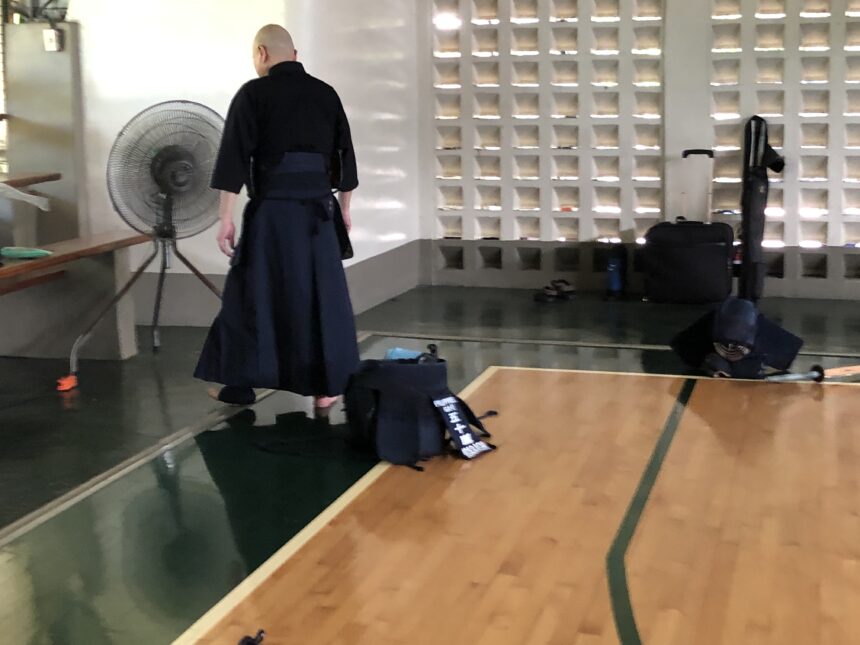
Featured image: Kendo bogu on the side by Ominae on Wikimedia Commons, CC BY-SA 4.0. Cropping or resizing may be applied for site display. The credit identifies the source image only and does not imply endorsement by the creator, Wikimedia Commons, AJKF, any dojo, teacher, operator, or cultural organization.
Sources
- All Japan Kendo Federation: Kendo/Iaido/Jodo
- All Japan Kendo Federation: The Concept of Kendo
- All Japan Kendo Federation: The All Japan Kendo Federation’s Perspective of Kendo
- All Japan Kendo Federation: FAQ
- All Japan Kendo Federation: Method of shinai inspection at tournaments
- JNTO: Experiences in Japan
Editorial disclosure: This is an independent planning guide. It does not rank, sell, or guarantee any class, dojo, operator, instructor, reservation, safety outcome, or booking result.