Choose the craft by what happens after class
Short answer: pottery and craft workshops in Japan are most enjoyable when you know what you will make, whether it can travel home, and what rules the studio needs you to follow. A one-hour activity and a serious artisan workshop are very different experiences, even if both sound like “craft.”
Last checked: August 28, 2026. Workshop availability, prices, language support, child rules, tool use, clothing requirements, drying or firing timelines, pickup, shipping, cancellation terms, and photography rules can change. Confirm current details with the official workshop, local tourism office, museum, craft association, or artisan studio before booking.
Japan has many craft paths
JNTO’s traditional craft guidance notes that Japan has a wide range of craft experiences and that visitors can learn directly from artisans while trying to make something themselves. The Japan Kogei Association groups traditional kogei into fields such as ceramics, textiles, urushi work, metalwork, woodwork, bamboo work, dolls, and other works.
That variety matters. Pottery, washi paper, indigo dyeing, lacquer, bamboo, knife sharpening, glass, woodwork, textiles, and food-sample making do not ask the same thing from a traveler. Some are clean and short. Some involve water, stains, heat, blades, dust, drying time, or careful handling after the session.
Pottery needs special planning
Pottery is one of the easiest craft ideas to imagine, but it is not always the easiest souvenir to take home. The Japan Kogei Association’s ceramics guide explains that Japanese ceramics involve many forming techniques, including hand-pinching, coil-building, slab-building, mold-forming, and wheel-throwing. It also explains that glazing and firing shape the final result.
For a traveler, this means your bowl or cup may not be finished when class ends. It may need drying, trimming, glazing, firing, pickup, or shipping. Ask whether the item can be taken home the same day, whether the studio can ship overseas, what happens if it cracks during firing, and how long the final delivery usually takes.
Compare workshop types
| Workshop | Best for | Check first |
|---|---|---|
| Pottery | Travelers who want a tactile clay experience and do not mind waiting for the result | Firing, pickup, shipping, breakage, clothing, and nail length |
| Textiles or dyeing | Visitors who want color, pattern, fabric, or wearable souvenirs | Stains, drying time, allergies, washing instructions, and luggage space |
| Washi or paper craft | Families, beginners, and travelers wanting lighter finished items | Drying, flat packing, water use, and child supervision |
| Lacquer, wood, metal, or knives | Craft-focused travelers who want tools and material history | Sharp tools, heat, dust, lacquer sensitivity, shipping, and age limits |
Safety questions are part of the booking
A good workshop should tell you what to wear, what tools you will use, and whether the activity is suitable for children, older travelers, pregnant visitors, or people with allergies. Ask about heat, sharp tools, dust, smoke, dyes, solvents, lacquer, clay, metal, glass, and ventilation when relevant.
Do not hide health or mobility concerns to avoid awkwardness. The studio can only help if it knows what you need. For children, confirm whether adults must participate, whether tools are shared, and whether the final object is fragile or sharp.
Studio etiquette
JNTO’s general manners guidance is useful here: when unsure, ask. Workshops happen in studios, museums, homes, community spaces, or working production areas. Do not touch tools, shelves, kilns, unfinished pieces, materials, samples, or private storage unless invited. Keep bags out of work areas and follow cleaning instructions.
Photography also needs permission. Some artisans may allow hands-only photos but not faces, tools, process details, storage areas, price lists, other guests, or unfinished work. Do not livestream a workshop unless the host explicitly says it is allowed.
What can you bring home?
Before booking, separate “made during class” from “ready to take home.” A paper item, small textile, or food sample may be packable the same day. A pottery piece may need firing. A knife or sharp tool may need customs, airline, or shipping checks. A dyed item may need drying. A fragile item may need protective packing.
Ask who is responsible if shipping is delayed, lost, cracked, or returned. Ask whether the studio ships internationally and whether the listed price includes shipping. If the answer is unclear, choose a lighter craft or plan to buy a finished piece from the studio shop instead.
How it fits a wider Japan trip
Use this guide with Hands-On Cultural Experiences in Japan. Craft workshops pair well with a slow neighborhood day, a museum, a market, a tea ceremony, or a regional town known for a material. They pair poorly with a same-day long-distance transfer, tight luggage plan, or activity that leaves no room for cleanup and pickup.
If you want a calm indoor cultural session, compare this with Calligraphy Experience in Japan. If the goal is clothing and photography, use the Kimono Experience in Japan guide. If the goal is food, use Hands-On Japanese Food Experiences.
Photo credit
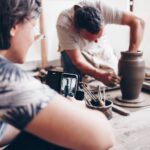
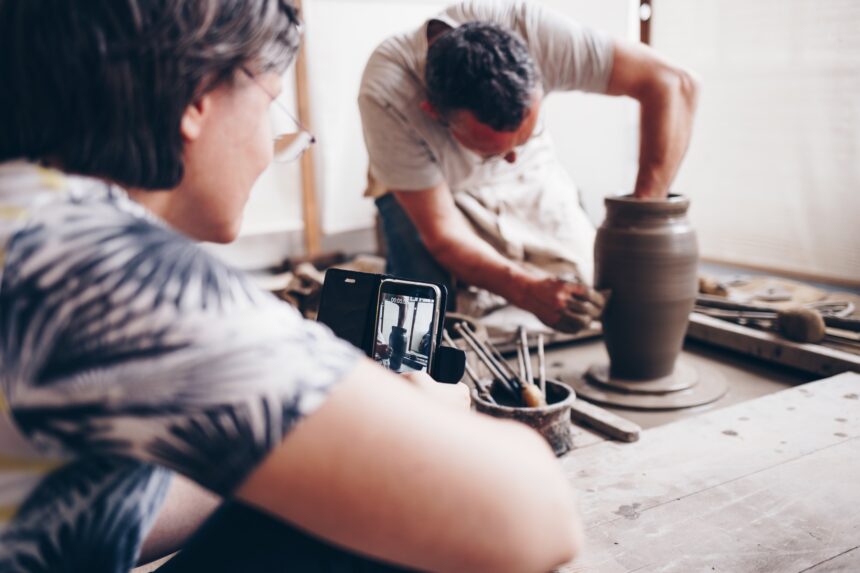
Featured image: Japanese wheel pottery workshop.jpg by Lodz Design via Wikimedia Commons and Flickr, licensed under CC BY 2.0. Cropping or resizing may be applied for site display. The credit identifies the source image only and does not imply endorsement by the creator, Wikimedia Commons, Flickr, JNTO, Japan Kogei Association, artisans, studios, museums, tourism bodies, or local organizations.
Sources
- JNTO: Traditional Craft Experiences and Workshops
- JNTO: Experiences in Japan
- Japan Kogei Association
- Japan Kogei Association: Ceramics
- JNTO: Customs and Manners
- JNTO: Responsible Travel Guide
- Wikimedia Commons image file and license record
Editorial disclosure: This independent guide is not affiliated with or endorsed by JNTO, Japan Kogei Association, Wikimedia Commons, Flickr, the photographer, artisans, workshops, studios, museums, tourism bodies, or local organizations. Always confirm current workshop, safety, shipping, photography, and booking rules with official sources before reserving.