Let the temple set the rules
Short answer: Buddhist temple etiquette in Japan is mostly about quiet attention, clean movement, and following local signs. A temple visit, Zen session, shakyo, temple stay, or Koyasan route will feel much better if you know when to remove shoes, when not to photograph, how to behave around prayer spaces, and why temples are not just scenic buildings.
Last checked: August 28, 2026. Temple hours, entry rules, photography areas, prayer guidance, service participation, clothing expectations, smoking areas, shoe rules, and visitor routes vary by temple and can change. Confirm current details with the official temple, local tourism office, signs on site, and staff instructions before entering or joining an activity.
Temple or shrine?
JNTO explains that shrines are connected with Shinto and are often marked by torii gates, while temples are Buddhist spaces and often have temple gates, halls, Buddhist images, incense, and different prayer customs. This matters because some visitor habits are not interchangeable.
At a shrine, clapping may be part of the prayer pattern. At a temple, JNTO and Nara’s official visitor guidance both note that visitors generally join their hands in prayer and do not clap. If you forget, do not panic. Step aside, watch quietly, and follow local signs or staff guidance.
Basic temple behavior
| Situation | Good habit | Why it matters |
|---|---|---|
| Gate or hall entrance | Slow down, remove hats where requested, and bow if appropriate | You are entering a religious space, not only a photo location |
| Shoes and tatami | Wear clean socks and remove shoes when signs or staff ask | Temple interiors and tatami areas require cleanliness |
| Photos | Check signs before taking photos or video | Some halls, images, ceremonies, and private areas are restricted |
| Voice and phones | Keep volume low and silence your phone | Other visitors may be praying, resting, or attending services |
Incense, offerings, and prayer
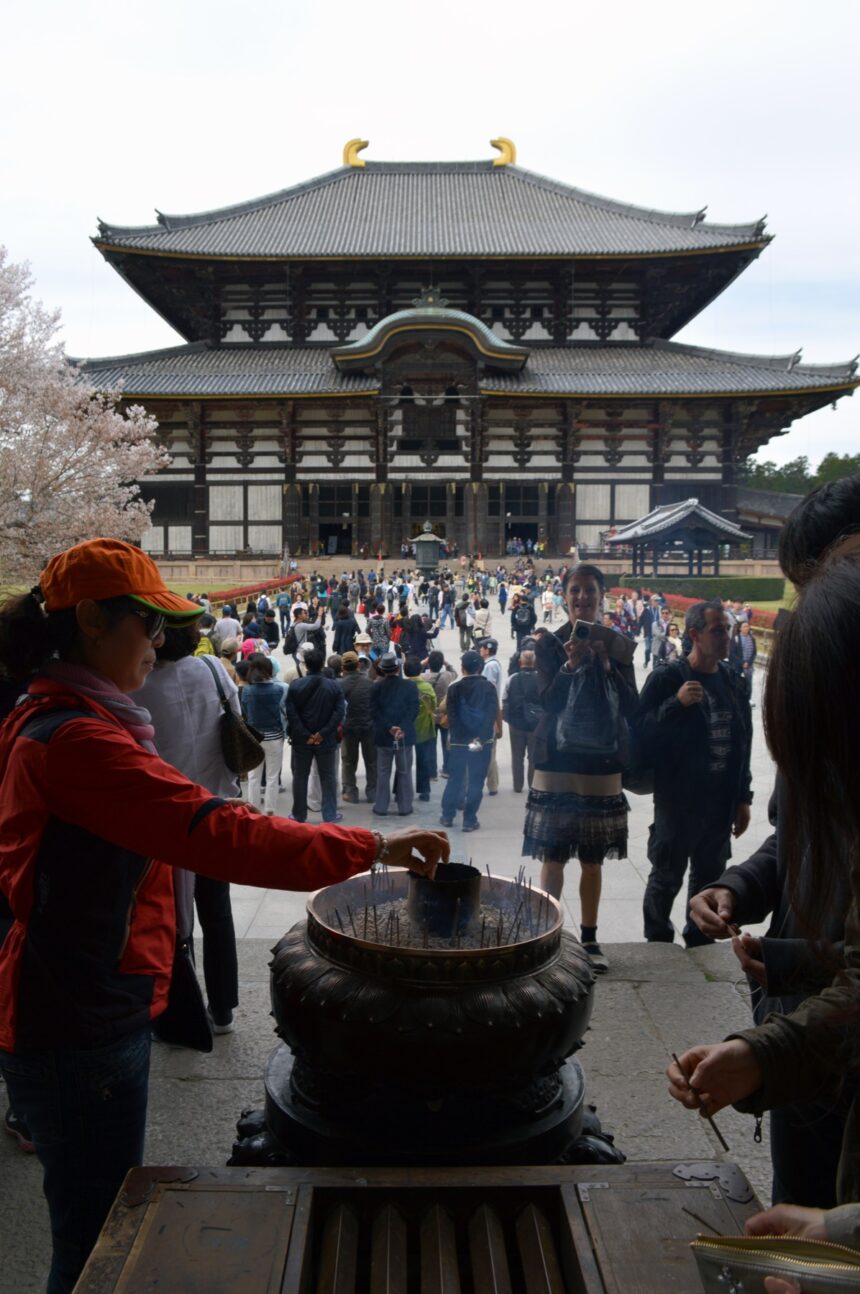
Many temples have incense, offering boxes, bells, or areas for quiet prayer. If incense is available, buy or receive it in the way the temple indicates, light it safely, and do not wave fire, ash, or smoke carelessly near other people. Do not blow smoke toward people or crowd the burner for photos.
If you make an offering, do it quietly and move aside so others can approach. Joining hands, bowing, and standing silently are usually enough for visitors. You do not need to perform every gesture perfectly. Respect matters more than performance.
Clothing and temple stays
Kongobu-ji’s official Koyasan guidance asks visitors to dress and behave solemnly, avoid overly revealing clothing, and dress modestly at Okunoin. It also says the yukata provided at shukubo is intended for indoor use and is not suitable for visiting sacred sites such as Danjo Garan and Okunoin.
That is Koyasan-specific guidance, but it gives a useful principle: if you are joining a temple stay, morning service, meditation, sutra copying, or a sacred-site visit, choose modest clothing that lets you sit, bow, remove shoes, and move quietly. Avoid clothing that makes the setting feel like a costume shoot.
Photography needs permission
JNTO’s responsible photography guidance advises asking permission before photographing people and respecting facility restrictions. Kyoto City’s responsible travel guidance also reminds visitors not to photograph in prohibited areas, not to block roads, and not to touch cultural heritage more than necessary.
Inside temples, never assume that “no flash” means all photography is allowed. Buddhist images, halls, screens, gardens, monks, ceremonies, private rooms, other guests, and prayer areas may have separate restrictions. When in doubt, put the camera away.
Experiences need extra care
Temple activities such as Zen meditation, shakyo, morning services, shojin ryori meals, garden visits, and temple stays are hosted experiences. Arrive early, follow the instructor’s lead, ask where to sit, and keep your phone silent. If chairs, language support, food restrictions, or accessibility help are needed, ask before booking.
Do not film an instructor’s hands, a monk’s movement, a prayer, or another guest unless permission is explicit. Do not enter private corridors, kitchens, lodging rooms, cemetery areas, or workspaces because they look atmospheric.
Local community matters
Nara’s official visitor guidance says shrines and temples are religious places, not sightseeing spots. Kyoto’s responsible travel guidance asks visitors to be considerate in residential areas and religious sites, avoid private property, avoid blocking roads, and avoid damaging cultural property. These rules are practical in famous areas where temples stand close to homes, schools, shops, and narrow streets.
Carry out trash where bins are not available. Keep bags close to your body in narrow halls. Do not touch old buildings, paintings, statues, bamboo, stones, ropes, lanterns, or offerings unless the temple clearly invites visitors to do so.
How this fits a wider Japan trip
Use this guide with Hands-On Cultural Experiences in Japan. For specific planning, compare it with Zen Meditation in Japan, Temple Stay in Japan, Calligraphy Experience in Japan, and Koyasan and Kumano Spiritual Routes Guide.
The safest approach is simple: check the official page before you go, read signs when you arrive, follow staff guidance, and choose quiet attention over trying to document everything.
Photo credit
Featured image: People lighting incense at the Chumon incense burner, Todai-ji, Nara, 2016.jpg by Daderot via Wikimedia Commons, released under CC0 1.0. Cropping or resizing may be applied for site display. The credit identifies the source image only and does not imply endorsement by the creator, Wikimedia Commons, Todai-ji, JNTO, Koyasan religious organizations, Kyoto City, Nara tourism bodies, temples, worshippers, visitors, or local organizations.
Sources
- JNTO: Shrine and Temple Traditions
- JNTO: Shrine and Temple Visits Best Practices
- Koyasan Shingon Sect Main Temple Kongobu-ji: Guide for Worship
- Kyoto City Official Travel Guide: Responsible Travel
- Nara Travelers Guide: Shrine and Temple Etiquette
- JNTO: Responsible Photography in Japan
- Wikimedia Commons image file and license record
Editorial disclosure: This independent guide is not affiliated with or endorsed by JNTO, Koyasan religious organizations, Kyoto City, Nara tourism bodies, Todai-ji, Wikimedia Commons, the photographer, temples, shrines, worshippers, visitors, guides, or local organizations. Always confirm current temple access, worship, clothing, photography, event, and visitor rules with official sources and on-site signs.