Choose comfort before the photo
Short answer: a kimono experience in Japan can be a lovely part of a trip if you plan it as clothing, walking, weather, time, and etiquette, not only as a photo session. Choose a rental or dressing plan that fits your route, body, shoes, return time, and the places you want to visit.
Last checked: August 28, 2026. Rental prices, opening hours, return deadlines, next-day return options, sizes, hair styling, photo plans, luggage storage, language support, cancellation rules, and local photography guidance can change. Confirm current details with the official shop, local tourism office, shrine, temple, facility, or neighborhood guidance before booking.
What a kimono experience usually includes
Most visitor-oriented kimono experiences are rental and dressing services. A typical flow is reservation, check-in, choosing clothing, being dressed by staff, adding accessories, storing luggage or shoes, walking nearby, taking photos where allowed, and returning the items by the required time. Some plans add hair styling or a guided photoshoot.
In many places, summer plans may use yukata, a lighter summer garment, while cooler seasons may use kimono. Do not assume every shop uses the same wording, items, sizes, or return rules. Read the official plan carefully and ask before payment if you need a larger size, taller size, children’s size, wheelchair access, pregnancy support, allergy-safe hair products, or help with modesty concerns.
Where it works best
| Plan | Best for | Watch for |
|---|---|---|
| Short rental walk | First-time visitors who want a low-pressure cultural dressing experience | Return time, footwear, rain, stairs, and luggage |
| Photoshoot plan | Travelers who want professional photos without blocking public spaces | Permission, location rules, privacy, and image-use rights |
| Festival yukata | Summer travelers attending matsuri, fireworks, or evening events | Heat, sandals, crowds, toilets, and transport after dark |
| Tea, garden, or temple pairing | Visitors who want a calm cultural day | Shoe rules, sitting comfort, photography restrictions, and time pressure |
Kyoto, Kanazawa, Asakusa, Kawagoe, Kurashiki, and other historic areas can work well, but the best location is the one where you can walk slowly, return on time, and avoid disturbing residents, worshippers, shop staff, or other visitors.
Comfort is practical, not optional
Kimono and yukata can change how you move. Sandals may be slower than your usual shoes. Stairs, hills, stone streets, rain, summer heat, winter cold, and long queues can become tiring. Build the route around short distances, rest breaks, toilets, indoor stops, and a clear return plan.
Wear simple inner layers that match the season and are easy to change out of. Avoid bulky collars, difficult makeup timing, and anything that makes dressing complicated. If the shop asks you to arrive at a fixed time, treat that as the real time, not a flexible arrival window.
Photography etiquette
JNTO’s general manners guidance is simple: be polite, ask when unsure, and respect people and places. For kimono experiences, that means asking before photographing other people, avoiding blocked streets, not entering private property, and following all shrine, temple, museum, shop, and garden photography rules.
Kyoto’s official responsible travel guidance is especially important in Gion and other residential or cultural districts. Kyoto City asks visitors not to stop, touch, follow, or take unauthorized photos or videos of geiko and maiko. Recent Kyoto guidance also warns against trespassing and photographing private property. Wearing kimono does not make those rules disappear.
Shrines, temples, and tatami areas
If your route includes temples, shrines, ryokan, tea rooms, or historic buildings, check shoe rules and photography signs before entering. Another Kyoto’s official manners guidance notes that many tatami areas do not allow outdoor shoes. Some interiors may also restrict large bags, umbrellas, food, flash, tripods, or photography.
Move slowly around prayer areas and ceremonies. Do not pose in a way that blocks worshippers, gates, steps, or narrow corridors. If you are doing tea ceremony, calligraphy, or a guided cultural lesson while wearing kimono, confirm whether sitting posture and sleeve movement will be comfortable.
Booking questions to ask
- What exactly is included: kimono or yukata, obi, sandals, bag, socks, hair, photos, or insurance?
- What time must everything be returned, and what happens if transport is delayed?
- Can luggage, shoes, and coats be stored, and are valuables accepted?
- Are sizes available for tall, plus-size, pregnant, older, or child travelers?
- What happens in heavy rain, heat, snow, or sudden illness?
- Are photos allowed at the planned locations, and who owns paid photoshoot images?
How it fits a wider Japan trip
Use this guide with Hands-On Cultural Experiences in Japan. A kimono walk can pair well with tea ceremony, calligraphy, a garden, a quiet old street, or a short professional photoshoot. It pairs poorly with a rushed shopping day, long luggage transfers, packed buses, or a plan where every stop depends on exact timing.
If the deeper interest is textile history, add a museum or craft stop instead of only taking photos. If the main goal is comfort and memory, keep the route short. A relaxed two-hour experience is often better than a full day spent worrying about sore feet and return deadlines.
Photo credit
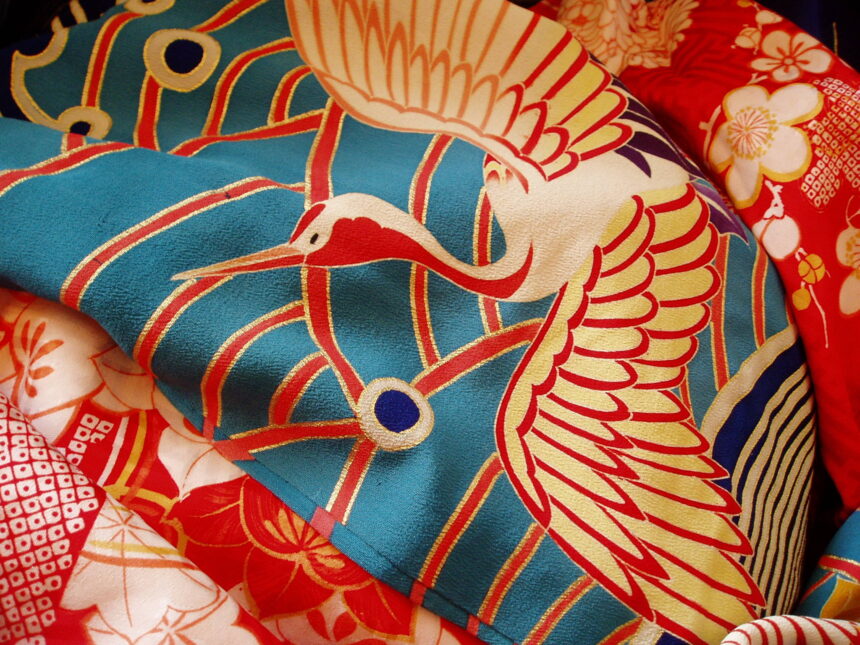
Featured image: Kimono fabrics.jpg by merec0 via Wikimedia Commons and Flickr, licensed under CC BY 2.0. Cropping or resizing may be applied for site display. The credit identifies the source image only and does not imply endorsement by the creator, Wikimedia Commons, Flickr, JNTO, Kyoto City, Kyoto tourism bodies, rental shops, cultural facilities, or local organizations.
Sources
- JNTO: Experiences in Japan
- JNTO: Tradition
- JNTO: Customs and Manners
- JNTO: Responsible Travel Guide
- Kyoto City Official Travel Guide: Responsible Travel
- Kyoto City Official Travel Guide: Four Guidelines to Follow When Visiting Kyoto
- Another Kyoto Official Travel Guide: Manners in Kyoto
- Wikimedia Commons image file and license record
Editorial disclosure: This independent guide is not affiliated with or endorsed by JNTO, Kyoto City, Kyoto tourism bodies, Wikimedia Commons, Flickr, the photographer, rental shops, temples, shrines, cultural facilities, or local organizations. Always confirm current rental, access, photography, etiquette, weather, and return rules with official sources before booking or visiting.