Convenience store breakfast in Japan: what travelers can buy before a busy day
Short answer: a Japanese convenience-store breakfast works best when it fits the next two hours of your trip. Choose food by where you will eat, whether it needs heating or utensils, how long you will carry it, and whether the package gives enough ingredient information for your needs.
If you need the full convenience-store workflow, read Japanese Convenience Store Food Guide. If you are choosing between breakfast styles, start with Japanese Food Basics and Japanese Breakfast Guide for Travelers.
Last checked: August 4, 2026. Convenience-store products, prices, labels, stock, hours, heating, seating, toilets, bins, utensils, payment methods, and dietary information vary by branch, chain, region, season, and date. Check the exact package and branch before relying on them.
Start with your morning, not the product
The best convenience-store breakfast is not always the most famous item. Before an early train, you may need something compact and low-smell. Before a theme park, you may need food that keeps you full without slowing entry. Before hotel checkout, you may need a meal that creates little rubbish and does not require a microwave.
This article is intentionally narrower than a full convenience-store guide. It focuses on breakfast decisions for travelers who need speed, flexibility, and a safe morning plan.
Breakfast chooser
| Morning situation | Good starting point | Be careful with |
|---|---|---|
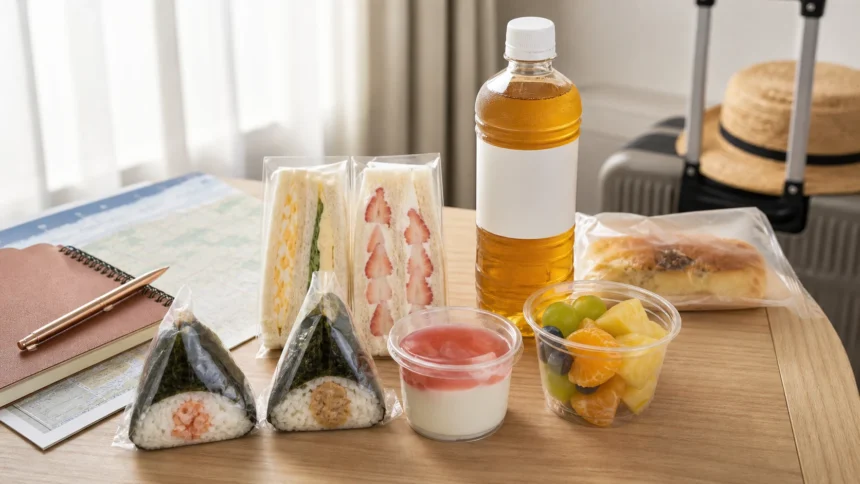
| Early train | Onigiri, sandwich, bakery item, banana, yogurt, bottled drink, or unopened snack. | Strong smells, leaks, rubbish, and food that needs heating. |
| Theme park or long outdoor day | Rice item or sandwich plus water, tea, sports drink, or another simple drink. | Skipping breakfast, buying only sweets, or waiting until the entrance area is crowded. |
| Hotel checkout morning | Ready-to-eat food with compact packaging and a drink. | Large heated meals, soup containers, and rubbish with no disposal plan. |
| Jet-lagged morning | Small portions: yogurt, fruit, bread, rice ball, warm drink, or light snack. | Buying a large bento before you know your appetite. |
| Budget breakfast | One filling base plus one drink, then add fruit, yogurt, or a snack only if needed. | Turning a cheap stop into a basket of impulse sweets. |
| Dietary or allergy concern | A sealed package whose label you can check. | Hot-counter food, loose bakery items, unclear fillings, sauces, and shared equipment. |
Useful breakfast categories
- Onigiri and packaged rice items: compact and useful for early mornings, but fillings and wrapper styles vary.
- Sandwiches: easy to eat quickly, but check egg, milk, wheat, mayonnaise, meat, seafood, and chilled storage.
- Bakery items: convenient for walking days, but loose or store-bagged items may have less label evidence.
- Yogurt, fruit, and small sides: good for lighter mornings if you can keep them cold until eating.
- Boiled eggs or protein items: useful when you want something more filling, but confirm the package and eating setup.
- Drinks: water, tea, coffee, milk drinks, juice, and sports drinks can matter more than another snack on hot or active days.
- Warm food: helpful in winter or after a rough travel night, but only if the branch and package support heating.
Buying the night before
Buying breakfast the night before can save a rushed morning, especially before an early train, day tour, airport transfer, or theme park day. It works best for unopened packaged food that fits the storage instructions. A room refrigerator can help only if the product can be stored that way and you will remember it before checkout.
Be cautious with chilled meals, hot foods, salads, fresh items, and anything whose package says to keep refrigerated. Do not carry chilled food overnight in a warm room or bag and treat the printed date as a safety promise. Storage instructions still matter.
What to avoid on a rushed morning
- Food that needs a microwave when you are not sure one is available.
- Soup, noodles, or sauce-heavy meals before a train, bus, or crowded route.
- Complicated packages that need draining, mixing, or multiple films when you have no table.
- A sweet drink and dessert only, if you need energy for a long outdoor day.
- Anything with unclear ingredients when an allergy or strict diet matters.
- Opening food before you know where you can eat and dispose of rubbish.
Where to eat it
Some convenience stores have eat-in areas, but not every branch does, and seats may be limited or unavailable. Hotels, station areas, parks, trains, malls, and public spaces each have their own rules and expectations. Decide the eating place before buying messy food.
If you are using a long-distance train, check the operator and the exact situation. For local or commuter trains, avoid messy or strong-smelling meals, especially in crowded cars. When in doubt, choose food that stays unopened until you reach a clear eating place.
Allergy and dietary notes
Convenience stores can be useful for travelers with allergies because sealed packages may provide label information. That does not make every item safe. Restaurant-made, loose, counter, bakery-case, or hot-snack items may not provide the same evidence as a sealed package, and labels do not always answer cross-contact questions.
If a mistake would be medically serious, read Japan Food Allergy Guide for Travelers before relying on convenience-store food. If vegetarian, vegan, halal, gluten-free, or other dietary rules matter, check ingredients, sauces, stock, alcohol-derived seasonings, pork, seafood, egg, milk, wheat, soy, sesame, and shared equipment risk.
Simple breakfast formulas
| Goal | Simple formula | Why it works |
|---|---|---|
| Early train | One compact food plus one drink | Low setup and easy to carry. |
| Long sightseeing day | One filling base plus water or tea | Prevents the first food stop from controlling the morning. |
| Light appetite | Yogurt, fruit, small bread, or drink plus backup snack | Works for jet lag without overbuying. |
| Budget control | Rice or sandwich base plus one add-on | Keeps the stop useful without impulse spending. |
| Hotel room | Ready-to-eat items with contained rubbish | Avoids microwave, smell, and checkout friction. |
Common mistakes
- Assuming every convenience store is open, stocked, or equipped the same way.
- Buying food that needs heating when you have no confirmed microwave.
- Choosing only viral sweets before a physically demanding day.
- Ignoring storage instructions after buying the night before.
- Opening food before identifying a place to eat and dispose of rubbish.
- Assuming package appearance proves ingredients or allergy safety.
FAQ
What should I buy for breakfast at a Japanese convenience store?
Start with a compact base such as an onigiri, sandwich, bakery item, yogurt, fruit, or simple packaged food, then add a drink. Choose based on where and when you will eat it.
Can I buy breakfast the night before?
Yes, if the food can be stored according to the package instructions and will still fit your morning route. Be careful with chilled and fresh foods.
Are convenience-store breakfasts good before theme parks?
Yes. A simple breakfast before entering can protect the morning from hunger, queues, and expensive impulse snacks.
Are convenience-store foods safe for allergies?
They can provide useful label information, but they are not automatically safe. Read the exact package and avoid unclear counter or loose items when an allergy is serious.
Related guides
For the complete convenience-store workflow, read Japanese Convenience Store Food Guide. For seasonal items, read Japan Convenience Store Seasonal Food Guide. For broader morning choices, use Japanese Breakfast Guide for Travelers and Hotel Breakfast in Japan.
Sources
- JNTO: Conbini, A One-Stop Shop for Food and Amenities
- JNTO: Local Street Food Favorites and Budget Restaurants in Japan
- JNTO: Food and drink in Japan
- CAA: Food allergen labeling information
- FamilyMart: Welcome to Japan
- Lawson: Welcome to Japan
Editorial disclosure: This guide is independent and does not rank or promote specific convenience-store chains or products.