Sushi restaurant types in Japan: conveyor belt, counter, and casual chains
Short answer: for a low-pressure first sushi meal in Japan, start with a conveyor-belt or tablet-order casual restaurant. Choose a counter, standing shop, set meal, or omakase-style course only when the time, price, reservation, group comfort, and dietary questions fit your trip.
If you are still choosing between ramen, sushi, udon, soba, convenience stores, markets, station food, breakfast, hotel dining, and izakaya, start with Japanese Food Basics. For a deeper sushi-specific guide, read Sushi in Japan for First-Time Visitors.
Last checked: August 4, 2026. Sushi menus, prices, plate systems, ordering screens, pieces per order, queues, reservations, cancellation rules, payment methods, language support, child policies, luggage rules, and dietary accommodation vary by venue. Confirm current details with the exact restaurant before relying on them.
Choose the format before the fish
“I want sushi in Japan” is not one decision. A casual chain, conveyor-belt restaurant, standing sushi shop, counter restaurant, omakase-style course, depachika pack, and takeaway set all create different commitments. The best first choice is the format whose uncertainty you can manage.
This article is a short format chooser. It does not rank sushi restaurants or explain every etiquette detail. Its job is to help you decide what kind of sushi meal fits your day before you spend time, money, or reservation effort.
Quick chooser
| Format | Best for | Watch out for |
|---|---|---|
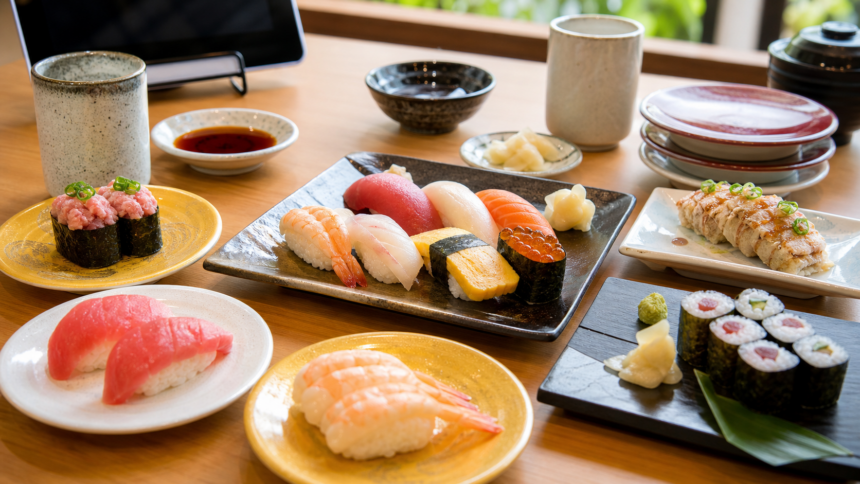
| Conveyor-belt or tablet-order casual sushi | First-time visitors, families, solo travelers, budget control, and low-pressure ordering. | Branch-specific screen rules, plate counting, queue systems, and payment methods. |
| Casual sushi chain with table seating | Groups that want photos, clear menus, flexible ordering, and a familiar pace. | Busy meal times, app or reception terminals, and menu differences by branch. |
| Standing sushi | Solo travelers or pairs who want a quick focused meal. | Luggage, children, mobility needs, slow meals, and large groups. |
| Casual counter sushi | Travelers who want chef interaction without committing to a high-end course. | Price units, language comfort, pace, and allergy communication. |
| Set meal or lunch set | People who want fewer decisions and a clearer total. | Limited substitutions and hidden ingredients in soup, sauces, rice, or sides. |
| Omakase-style course | Special meals where the restaurant is part of the trip. | Reservation terms, cancellation fees, price inclusions, arrival time, and dietary limits. |
| Takeaway or depachika sushi | Hotel meals, train timing, rainy days, gifts, and easy backup food. | Label reading, freshness timing, eating location, rubbish, and lack of staff explanation. |
Conveyor-belt and tablet-order sushi
This is often the easiest first sushi experience because you can control quantity, pace, and item choice. Many casual venues use tablets, order lanes, reception terminals, or self-payment systems, but the exact workflow is branch-specific. Do not assume one chain’s screen, plate slot, or checkout method applies everywhere.
Before ordering, check what the displayed price buys: one piece, two pieces, one plate, a set, or a special item. Look for a running total if the screen provides one. If you are unsure whether an order went through, ask staff before tapping the same item repeatedly.
Casual chains and table seating
Casual sushi chains can be useful for families, groups, and travelers who want a relaxed first try. Table seating, photos, touch panels, and clear categories can reduce pressure. They also make it easier to stop after a few plates than at a course restaurant.
The tradeoff is that casual does not mean simple in every detail. Branches can differ in queue systems, English support, payment rails, menu availability, and allergy information. Treat a chain as a lower-pressure format, not as a guarantee that every branch works the same way.
Standing sushi and quick counter meals
Standing sushi and compact counters can be excellent for a short solo meal or a focused lunch. They are usually a poor match for big luggage, strollers, young children, mobility concerns, or a group that wants to talk slowly.
Before entering, look at the space and rhythm. If the restaurant is narrow, keep bags compact and avoid blocking service space. If the setup feels too tight for your situation, choose a casual chain, department-store food floor, or set-meal restaurant instead.
Counter sushi and omakase-style courses
A counter meal can be memorable, but it is a higher-commitment choice. You may need a reservation, punctual arrival, a clear price unit, and early communication about allergies or dietary restrictions. Omakase means the selection is entrusted to the chef; it does not automatically tell you the final price, duration, cancellation rule, or flexibility.
Book this format when the meal itself is a priority and your schedule is stable. Do not place a strict counter reservation immediately after an uncertain flight, long train transfer, or weather-sensitive trip. For booking details, read How to Reserve Restaurants in Japan.
Takeaway and depachika sushi
Takeaway sushi is a different travel tool from restaurant sushi. It can work well for hotel nights, train timing, rainy days, and department-store browsing. It also reduces language pressure because you can point to the package or use labels.
The limits are important. You need a place to eat, a rubbish plan, and a freshness plan. If allergies matter, packaged labels can help, but they do not explain every restaurant-made item or cross-contact risk. For food hall planning, read Depachika Food Halls in Japan.
Which sushi type should you choose first?
- If you are nervous: choose conveyor-belt or tablet-order casual sushi.
- If you have children: look for table seating, clear ordering, and flexible pace.
- If you are solo: conveyor-belt, standing sushi, or a simple counter can all work.
- If you have luggage: avoid narrow counters and standing shops unless storage is obvious.
- If sushi is the special meal of the trip: choose a counter or course, but confirm reservation and cancellation terms first.
- If you have strict dietary needs: contact the exact venue before committing and keep a backup.
Etiquette basics without overthinking
You do not need to perform sushi perfectly. Follow the restaurant’s queue, screen, plate, photo, and payment instructions. Hands or chopsticks can both be acceptable. Use soy sauce lightly, do not return a plate to a conveyor belt after taking it, and ask before photographing staff, other guests, or an intimate counter setting.
At a small counter, avoid strong fragrance, loud phone calls, and bags in service space. If you misunderstand something, a simple apology and following staff is enough. For broader behavior, read Japanese Food Etiquette for First-Time Visitors.
Allergies, raw seafood, and dietary limits
Sushi can be difficult for allergies, vegetarian diets, vegan diets, halal needs, gluten-free needs, pregnancy-related choices, and raw seafood concerns. Rice seasoning, soy sauce, sauces, mayonnaise, dashi, sesame, egg, shellfish, fish, processed toppings, and shared tools can matter even when the visible topping looks simple.
Raw or insufficiently heated seafood can also carry food-safety risks. Wasabi, soy sauce, vinegar, and salt should not be treated as safety controls. If this matters for your health, read the deeper Sushi in Japan for First-Time Visitors guide and the Japan Food Allergy Guide for Travelers before choosing a venue.
Common mistakes
- Choosing a high-commitment counter meal when a casual first visit would be more comfortable.
- Assuming every conveyor-belt restaurant uses the same plate or screen system.
- Reading a price without checking whether it is per piece, pair, plate, set, or course.
- Taking large luggage into a narrow counter or standing shop.
- Assuming expensive sushi automatically solves allergy, dietary, or raw-seafood concerns.
- Booking a strict course on a day with uncertain transport timing.
FAQ
What is the easiest sushi restaurant type for a first visit?
Usually a conveyor-belt or tablet-order casual sushi restaurant. It gives more control over pace, quantity, and budget than a counter course.
Is counter sushi better than conveyor-belt sushi?
Not automatically. Counter sushi can be special, but conveyor-belt and casual chains can be better for first-time comfort, families, budget control, and flexible timing.
Do I need a reservation for sushi in Japan?
It depends on the restaurant. Casual venues may use walk-ins or queue systems, while popular counters and courses may require reservations. Check the exact venue before planning around it.
Is takeaway sushi a good option?
Yes, when you need a hotel meal, train-friendly plan, or low-pressure backup. Check labels, freshness, eating location, and rubbish rules.
Related guides
For the full sushi workflow, read Sushi in Japan for First-Time Visitors. For the wider food-format map, return to Japanese Food Basics. For bookings, use How to Reserve Restaurants in Japan. For payment, use Cash, Cards, and IC Payments for Food Travel in Japan. For allergies, use Japan Food Allergy Guide for Travelers.
Sources
- JNTO: Sushi in Japan Guide
- JNTO: Japanese food and drink
- JNTO: Japanese food etiquette
- MHLW: Preventing Anisakis food poisoning
- CAA: Food allergen labeling information
- Kura Sushi: first-use guide
- Sushiro: English official page
Editorial disclosure: This guide is independent and does not rank or promote specific sushi restaurants or chains.