Japan izakaya guide for first-time visitors: ordering, otoshi, drinks, and shared plates
Short answer: an izakaya is a casual Japanese place for drinks and shared food, but it is not just a bar. Before you sit down, be ready for possible table charges, an automatic small dish called otoshi, shared plates, drink-first ordering, last-order timing, and venue-specific payment rules.
If you are still choosing between ramen, sushi, udon, soba, convenience stores, markets, breakfast, hotel dining, and izakaya, start with Japanese Food Basics. For practical questions around payment, reservations, etiquette, allergies, dietary needs, and group backups, use Practical Food Guides in Japan.
Last checked: August 16, 2026. Menus, prices, otoshi, seating charges, time limits, smoking rules, all-you-can-drink plans, payment, reservations, allergy support, and English-language help vary by venue. Confirm current details at the exact izakaya before relying on them.
What makes an izakaya different?
JNTO describes izakaya as casual Japanese pub-style places serving drinks and a variety of food. That comparison helps, but the traveler decision is more specific. An izakaya often works best as a group dinner, a relaxed first-night meal, or a place to order several small dishes over time.
The important difference is flow. You may be seated, receive a wet towel, get a small dish automatically, order drinks first, share food from larger plates onto small individual plates, add more dishes later, and pay at the table or register. A chain izakaya, local independent shop, standing bar, seafood izakaya, yakitori-focused place, and private-room izakaya can all feel different.
Should you choose an izakaya?
| Good fit | Be careful if… | Better backup |
|---|---|---|
| You want a casual dinner with several dishes | You need a quiet, quick, single-plate meal | Set-meal restaurant, ramen, udon, or hotel dining |
| Your group wants to share | Your group has very different diets or budgets | Restaurant with individual set meals |
| You are comfortable asking about charges | You dislike unclear cover charges or automatic dishes | Menu-priced casual restaurant |
| You want drinks and food together | Some travelers are under 20 or cannot be around alcohol | Cafe, family restaurant, food hall, or hotel restaurant |
Otoshi and table charges
One of the most common surprises is otoshi: a small dish served automatically after you sit down. JNTO explains that at izakaya, a small appetizer may be served automatically and is not complimentary. The Consumer Hotline for Tourists also explains that otoshi can be considered a table charge and that a separate seating charge may exist in some cases.
Do not assume every izakaya has the same system. Do not assume the dish is free. Do not assume it can always be refused. If the charge matters, ask before ordering: “Is there an otoshi or table charge?” If you have an allergy, vegetarian need, or religious dietary restriction, say so before eating or accepting unclear food.
How the first visit usually flows
- Check the entrance. Look for a reservation list, waiting system, smoking notice, time limit, shoes-off rule, or table-charge sign.
- Confirm the group. Some venues seat only complete parties or manage private rooms by time slot.
- Sit and read the first prompts. Staff may bring an oshibori, otoshi, menu, tablet, QR code, or drink menu.
- Order drinks first if prompted. Soft drinks and non-alcoholic options may exist, but the exact menu decides.
- Order a few dishes, not the whole night. Izakaya food is often shared, and more dishes can be added later.
- Watch last order. All-you-can-drink, course, and private-room plans may stop orders before the end time.
- Check the bill calmly. Look for otoshi, seating charge, tax, service charge, drinks, courses, and any plan rules.
Shared plates and torizara
JNTO’s izakaya guide explains that food is often meant to be shared and that guests may receive small plates called torizara for taking portions from shared dishes. This does not mean you must share every item or finish someone else’s order. It means the normal group flow is often “order several dishes, take your portion, then add more.”
If your group includes allergies, vegetarian needs, halal concerns, or people who do not eat certain ingredients, order carefully. Shared plates can create cross-contact. A dish that looks vegetable-based may still contain fish stock, meat extract, egg, wheat, soy sauce, seafood, or shared fryer risk.
Drinks, non-drinkers, and age rules
Izakaya are associated with drinking, but not every visitor needs alcohol. Many venues offer soft drinks, tea, non-alcoholic beer-style drinks, or food-first use. The group should still choose a venue that fits everyone.
Japan’s alcohol age restriction remains 20. The National Tax Agency notes that even after the Civil Code adult age changed to 18, alcohol-related age restrictions remain 20. Travelers under 20 should not drink alcohol in Japan. If your group includes under-20 travelers, choose a venue and order style that does not create pressure or confusion.
All-you-can-drink plans
Nomihodai, or all-you-can-drink, can be useful for some groups, but it is not automatically cheaper or easier. Confirm the time limit, last order, included drinks, food-order requirement, whether everyone in the group must join, whether non-alcoholic drinks are included, and how the bill is handled.
Do not join a plan just because one person wants it. If the group drinks at different speeds, has dietary restrictions, or needs an early train, ordering normally may be calmer.
Common foods you may see
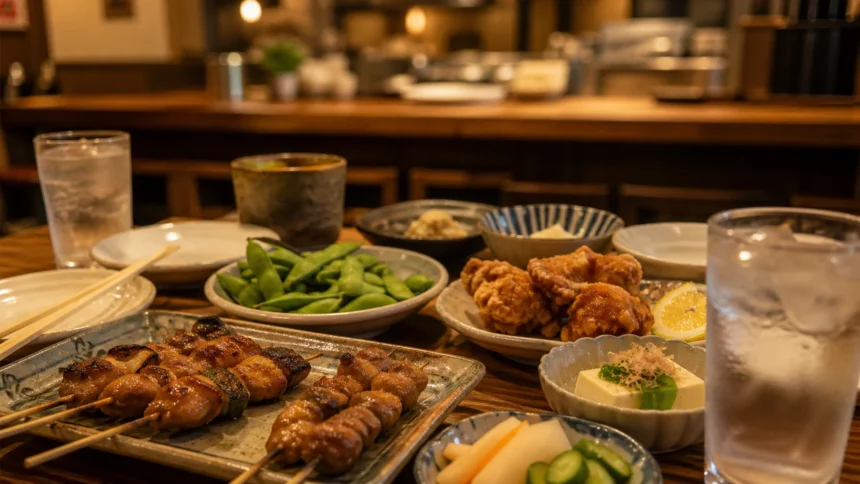
Izakaya menus vary widely, but travelers often encounter grilled skewers, fried chicken, sashimi, salads, tofu dishes, grilled fish, edamame, pickles, noodles, rice dishes, hot pots, regional specialties, and seasonal small plates. Treat those as menu-recognition cues, not guarantees.
If the dish name is unfamiliar, ask what it contains before ordering. If a serious allergy or religious diet matters, use the Japan Food Allergy Guide for Travelers before relying on a short English menu title.
Reservations, payment, and leaving
Popular izakaya, private rooms, course meals, large groups, and weekend evenings may need reservations. Read the restaurant reservation guide before booking a course, cancellation-fee plan, or large-party table.
Payment varies. Some venues bring the bill to the table; others ask you to pay at a register. Separate checks may not be available. Cashless payment is common in many places but not guaranteed, so read the payment marks and carry a yen backup. For payment basics, use Cash, Cards, and IC Payments for Food Travel in Japan.
Make the decision fit the day
Japan Izakaya Guide for First-Time Visitors is most useful when it solves one concrete travel decision. Start with izakaya ordering flow, seating charges, shared dishes, drinks, payment, and group comfort; then choose the option that fits the route already on the calendar. A famous format is not automatically the best choice if it adds a long detour, a hard reservation, or a new problem for the group.
Before leaving for Japan Izakaya Guide for First-Time Visitors, set the route anchor, the latest acceptable meal time, and one trigger for changing plans. For this topic, the trigger may be a sold-out slot, a long queue, bad weather, luggage, a dietary boundary, a tired child, or a train that cannot be missed. Decide it while the group is calm, not after the original plan has failed.
| Travel situation | First choice | Confirm before committing |
|---|---|---|
| The topic is the day’s main goal | Reserve or arrive early and keep the surrounding route light. | Official hours, entry format, current menu, payment, and cancellation or late-arrival rules. |
| The topic is a pleasant extra | Choose a nearby option with a normal meal or rest stop beside it. | Walking time, queue length, seating, toilets, and whether the group can leave easily. |
| The group has a constraint | Prefer the clearest option and save a second choice in the same area. | Ingredients, access, child needs, weather cover, luggage space, and a way to communicate questions. |
Check the exact venue or area
For japan izakaya guide for first-time visitors, use maps and social posts to discover candidates, then verify the exact official venue or area page before changing the itinerary. Branch hours, menus, reservations, campaign dates, tenant lists, payment methods, and access can differ. Recheck near the visit when weather, events, or stock could change the decision.
When planning japan izakaya guide for first-time visitors from overseas, check Japan local time, phone-number requirements, language options, card support, and visit-day evidence. Save the official page, confirmation screen, address, nearest station exit, and reservation or timed-entry details before leaving reliable Wi-Fi.
Keep the backup in the same movement pattern
For japan izakaya guide for first-time visitors, the backup should preserve the same movement pattern with less friction. Match an early train with a station option, rain with a hotel or mall, a late arrival with a convenience store or supermarket, and a failed campaign or queue with an ordinary restaurant. A backup that crosses the city is usually too expensive in time and energy.
Use the parent guide after this decision is clear. It can help compare areas, seasons, or purposes; this page should remain the practical answer for izakaya ordering flow, seating charges, shared dishes, drinks, payment, and group comfort. When a child or sibling article is added, link it from the parent and keep the promise of each page distinct so readers can move from the broad map to the next small choice.
FAQ
Should I plan this before booking my trip?
Only when izakaya ordering flow, seating charges, shared dishes, drinks, payment, and group comfort is a major reason for the trip or has a limited reservation window. Otherwise, place it as a flexible option near a route you already want to take. This keeps the plan useful even when dates, weather, or availability change.
What is the safest way to handle changing information?
For Japan Izakaya Guide for First-Time Visitors, record the date, location, and rule you actually confirmed, then save one nearby alternative. An old review, translated summary, or single branch should explain where to look next, not become a universal rule for the whole category.
What should I decide first?
Decide whether the topic is the anchor, a meal, a short break, or a backup. Then set the time and location around that role. The route becomes easier when the article has one job instead of trying to rank every possible choice.
Common mistakes
- Assuming the otoshi is free.
- Ordering too much food at once before seeing portion size.
- Joining an all-you-can-drink plan without checking last order and group rules.
- Assuming every izakaya is suitable for children, quiet dinners, allergies, or non-drinkers.
- Trying to split the bill item by item when the venue or group expects a simpler payment method.
FAQ
Do I have to drink alcohol at an izakaya?
No, but choose the venue carefully. Many izakaya have soft drinks or non-alcoholic options, while some places are strongly drink-focused. Check the menu and group expectations.
Is otoshi optional?
Sometimes policies vary, but you should not assume it is optional. Treat it as a possible table charge and ask staff before ordering if the charge or food itself matters.
Can solo travelers visit an izakaya?
Yes, especially at counter-friendly or casual venues, but the experience is often designed around sharing. Solo travelers may prefer counter seats, smaller plates, or a focused specialty izakaya.
Related guides
For the wider food-format map, start with Japanese Food Basics. For behavior across restaurant types, read Japanese Food Etiquette for First-Time Visitors. For booking, read How to Reserve Restaurants in Japan. For allergies, read Japan Food Allergy Guide for Travelers.
Sources
- JNTO: Izakaya Dining Guide
- JNTO: Japanese Customs and Etiquette
- Consumer Hotline for Tourists: Otoshi at izakaya
- National Tax Agency: preventing drinking under age 20
Editorial disclosure: This guide is independent and does not recommend or rank specific izakaya chains or restaurants.