Ekiben guide for Japan train travel: how to buy and eat station bento
Short answer: ekiben are boxed meals sold for train travel. They work best on Shinkansen, limited express, and other longer rail journeys when you buy before boarding, choose food that is easy to eat neatly at your seat, and stay mindful of smell, rubbish, liquids, and nearby passengers.
If you are still choosing between train bento, station food, ramen, sushi, convenience stores, breakfast, markets, hotel dining, and izakaya, start with Japanese Food Basics.
Last checked: August 16, 2026. Ekiben shops, products, stock, prices, train services, onboard sales, eating norms, rubbish rules, and allergy information vary by station, operator, product, and date. Confirm current details before relying on them.
What is ekiben?
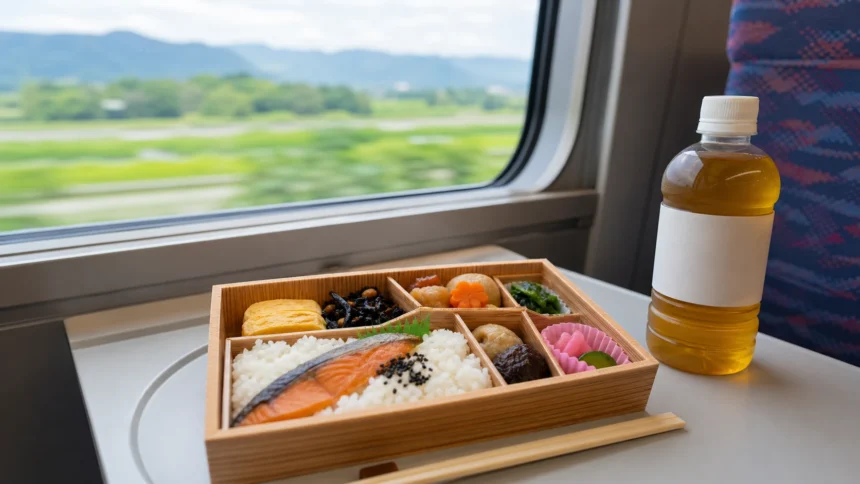
JNTO describes ekiben as boxed meals made for on-the-go eating, shaped by Japan’s rail network and regional food culture. JR East’s Ekiben Grand Prix also describes ekiben as station lunch boxes for long-distance train travel, often featuring regional specialties, seasonal ingredients, and packaging designed for train use.
That cultural side is real, but the traveler decision is practical. Ekiben is useful when the meal matches the train, seat, timing, and route. It is less useful if you are boarding a crowded local commuter train, cannot manage the packaging, have an unresolved allergy question, or are already short on time.
When ekiben is the right choice
| Situation | Good fit? | Why |
|---|---|---|
| Shinkansen or limited express with a reserved seat | Often yes | You usually have a table, a longer ride, and a clearer eating window. |
| Short local train or crowded commuter train | Usually no | Standing, crowding, short distance, and smell/spill risk make eating awkward. |
| Long transfer with station time | Yes, if the shop is easy to reach | Buying before boarding can protect the meal when onboard sales are limited. |
| Serious allergy or strict diet | Only with evidence | Packaged labels can help, but ingredients and cross-contact still need confirmation. |
| Family travel | Sometimes | Choose easy-to-open, non-messy food and keep wipes, bags, and drinks ready. |
Buy before boarding unless you know otherwise
JR Central says travelers may enjoy local ekiben on the Tokaido Shinkansen, but also notes that food and drink sales are not available in Standard Class and that travelers should purchase refreshments before boarding. Treat this as a strong planning rule: buy before boarding unless your exact service clearly offers onboard ordering or sales.
JR West’s FAQ says eating and drinking onboard is OK if passengers keep the cabin tidy and do not inconvenience others. That is a helpful rule of thumb: the question is not only “Can I eat?” but “Can I eat this neatly here without bothering people?”
Where to buy ekiben
Major stations may have ekiben counters, station shops, souvenir areas, department-store-style food zones, or prepared-food shops. JR West’s travel information notes that major terminal stations and station shopping complexes can offer dining, souvenirs, and in some areas ekiben. Tokyo Station is one famous example, but ekiben is not limited to Tokyo.
For Tokyo-specific station planning, use Tokyo Station Food Guide. For general backup food, use Japanese Convenience Store Food Guide.
How to choose an ekiben
- Check your train time first. Do not browse so long that boarding becomes stressful.
- Choose the eating window. A 2-hour ride can support a meal; a 20-minute transfer cannot.
- Read the package. Check storage, use-by timing, heating instructions, allergens, chopsticks, sauce packets, and opening method.
- Avoid messy or strong-smelling choices when crowded. Consider nearby passengers and your own cleanup.
- Plan rubbish. Keep packaging together and use station or train disposal only where provided.
Regional flavor without overpromising
Ekiben often highlights regional foods, seafood, meat, rice, vegetables, local specialties, seasonal ingredients, or creative packaging. This is part of the fun. But a regional name does not guarantee current stock, exact ingredients, or that the product is made in the way a traveler imagines.
Use regional ekiben as a low-friction way to taste a place while traveling. Do not build a tight itinerary around one specific boxed meal unless the vendor’s current information confirms it and you have a backup.
Eating onboard: the practical etiquette
- Open packaging carefully and keep lids, wrappers, chopsticks, sauce packets, and napkins controlled.
- Use the seat table when available, and do not spread food into the aisle or another passenger’s space.
- Avoid spilling soup, sauce, alcohol, or strongly scented food.
- Keep the cabin tidy, as JR West advises, and avoid inconveniencing other passengers.
- Pack rubbish neatly until you find the correct disposal point.
Allergies and dietary restrictions
Ekiben can contain fish, shellfish, egg, wheat, soy, milk, sesame, nuts, meat, gelatin, alcohol-derived seasoning, sauces, or shared-facility risk. A package may give more information than an unpackaged snack, but it still does not prove the level of cross-contact control you may need.
If a serious allergy matters, read Japan Food Allergy Guide for Travelers and choose only products whose current label and handling you can confirm. If you cannot confirm, use a safer backup.
Make the decision fit the day
Ekiben Guide for Japan Train Travel is most useful when it solves one concrete travel decision. Start with train timing, station access, bento storage, eating etiquette, and a backup after departure; then choose the option that fits the route already on the calendar. A famous format is not automatically the best choice if it adds a long detour, a hard reservation, or a new problem for the group.
Before leaving for Ekiben Guide for Japan Train Travel, set the route anchor, the latest acceptable meal time, and one trigger for changing plans. For this topic, the trigger may be a sold-out slot, a long queue, bad weather, luggage, a dietary boundary, a tired child, or a train that cannot be missed. Decide it while the group is calm, not after the original plan has failed.
| Travel situation | First choice | Confirm before committing |
|---|---|---|
| The topic is the day’s main goal | Reserve or arrive early and keep the surrounding route light. | Official hours, entry format, current menu, payment, and cancellation or late-arrival rules. |
| The topic is a pleasant extra | Choose a nearby option with a normal meal or rest stop beside it. | Walking time, queue length, seating, toilets, and whether the group can leave easily. |
| The group has a constraint | Prefer the clearest option and save a second choice in the same area. | Ingredients, access, child needs, weather cover, luggage space, and a way to communicate questions. |
Check the exact venue or area
For ekiben guide for japan train travel, use maps and social posts to discover candidates, then verify the exact official venue or area page before changing the itinerary. Branch hours, menus, reservations, campaign dates, tenant lists, payment methods, and access can differ. Recheck near the visit when weather, events, or stock could change the decision.
When planning ekiben guide for japan train travel from overseas, check Japan local time, phone-number requirements, language options, card support, and visit-day evidence. Save the official page, confirmation screen, address, nearest station exit, and reservation or timed-entry details before leaving reliable Wi-Fi.
Keep the backup in the same movement pattern
For ekiben guide for japan train travel, the backup should preserve the same movement pattern with less friction. Match an early train with a station option, rain with a hotel or mall, a late arrival with a convenience store or supermarket, and a failed campaign or queue with an ordinary restaurant. A backup that crosses the city is usually too expensive in time and energy.
Use the parent guide after this decision is clear. It can help compare areas, seasons, or purposes; this page should remain the practical answer for train timing, station access, bento storage, eating etiquette, and a backup after departure. When a child or sibling article is added, link it from the parent and keep the promise of each page distinct so readers can move from the broad map to the next small choice.
FAQ
Should I plan this before booking my trip?
Only when train timing, station access, bento storage, eating etiquette, and a backup after departure is a major reason for the trip or has a limited reservation window. Otherwise, place it as a flexible option near a route you already want to take. This keeps the plan useful even when dates, weather, or availability change.
What is the safest way to handle changing information?
For Ekiben Guide for Japan Train Travel, record the date, location, and rule you actually confirmed, then save one nearby alternative. An old review, translated summary, or single branch should explain where to look next, not become a universal rule for the whole category.
What should I decide first?
Decide whether the topic is the anchor, a meal, a short break, or a backup. Then set the time and location around that role. The route becomes easier when the article has one job instead of trying to rank every possible choice.
Common mistakes
- Assuming onboard food sales will be available.
- Buying too late and rushing the platform.
- Choosing a large or messy meal for a short or crowded ride.
- Forgetting drinks, wipes, chopsticks, or rubbish handling.
- Treating a photo of one famous ekiben as proof of current stock.
FAQ
Can I eat ekiben on the Shinkansen?
On the Tokaido Shinkansen, JR Central says travelers may enjoy local ekiben and drinks while being mindful of neighbors. Always check the exact train and class if you are unsure.
Can I eat ekiben on local trains?
It depends on the train, crowding, trip length, and operator guidance. A crowded commuter train is usually not a good place for a boxed meal. Save it for a longer, seated journey.
Should I buy ekiben before boarding?
Usually yes. Some onboard sales are limited or unavailable, so buy before boarding unless your exact service clearly offers food or drink ordering.
Is ekiben safe for allergies?
Only if the exact product label and handling fit your needs. Packaged food can help, but it does not automatically prove no cross-contact or dietary suitability.
Related guides
For the wider food-format map, start with Japanese Food Basics. For Tokyo Station, read Tokyo Station Food Guide. For backup meals, read Japanese Convenience Store Food Guide. For payment, read Cash, Cards, and IC Payments for Food Travel in Japan.
Sources
- JNTO: Experience Japan’s Local Ekiben Culture
- JR Central: Shinkansen Perfect Guide
- JR West FAQ: eating and drinking onboard
- JR West: Train Usage Guide
- JR West: Shops and Restaurants
- JR East: Ekiben Grand Prix
Editorial disclosure: This guide is independent and does not rank or promote specific ekiben products, stations, railway companies, or shops.