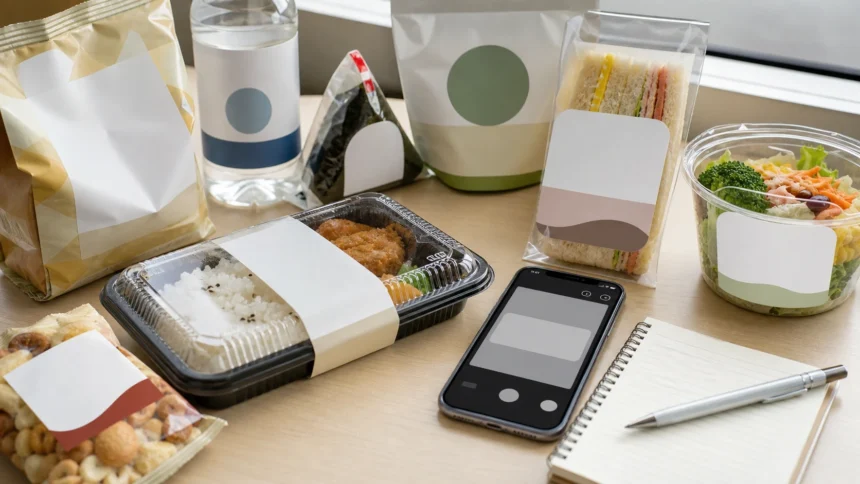
Japanese ingredient labels for travelers: allergens, dates, storage, and limits
Short answer: Japanese packaged-food labels can help you choose snacks, convenience-store food, supermarket meals, souvenirs, and takeout more carefully, but they do not solve every allergy, vegetarian, vegan, or halal question. Use labels for packaged food, then treat restaurant food, market food, loose counter items, shared tools, and unclear translations as separate checks.
For the wider practical planning map, start with Practical Food Guides in Japan. For convenience-store buying, use Japanese Convenience Store Food Guide.
Last checked: August 16, 2026. Food-labeling rules, allergen categories, product recipes, suppliers, packaging, storage instructions, use-by dates, and translation tools can change. Check the exact package in your hand before buying or eating.
What Japanese labels can and cannot do
The Consumer Affairs Agency states that food labelling must be in Japanese when food is sold in Japan. That means overseas travelers should expect Japanese labels even when a product is sold in a tourist area. English pamphlets and communication sheets can help you understand the system, but the package in front of you is still the object to check.
A packaged-food label can help with ingredients, allergens, date, storage, nutrition, quantity, and producer information. It usually cannot answer every question about restaurant cooking, shared tools, counter food, market samples, Muslim-friendly kitchen separation, or whether a translation app understood an ingredient correctly.
Use this five-part label check
| Check | Why it matters | Traveler caution |
|---|---|---|
| Ingredients | Shows what is intentionally used in the packaged product. | Translation may miss stock, extract, alcohol seasoning, gelatin, or compound ingredients. |
| Allergens | Japan has required and recommended allergen labeling for packaged processed foods. | Serious allergies still need your own threshold and cross-contact plan. |
| Date | Best-before and use-by dates guide freshness and safety planning. | Do not carry refrigerated or ready-to-eat food beyond safe storage conditions. |
| Storage | Some items need refrigeration, freezing, or quick consumption after opening. | A hotel fridge, train ride, summer day, or long sightseeing route can change the decision. |
| Preparation | Heating, water, microwave, or utensils may be needed. | Do not buy food that requires equipment you cannot use safely. |
Allergen labeling changed recently
CAA’s food allergy information notes several recent changes. Walnut was added as a specified ingredient in 2023. Macadamia nuts were added to the recommended category and matsutake was removed in 2024. Cashew nuts were added as a specified ingredient from April 1, 2026.
For travelers, the practical lesson is simple: do not rely on an old screenshot, old blog table, or remembered allergen list. Use current CAA information and check the exact package. For allergy travel planning, read Japan Food Allergy Guide for Travelers.
Packaged food is different from restaurant food
Consumer Hotline for Tourists explains that food labeling is useful when shopping for souvenirs, supermarkets, and convenience stores. It also notes that restaurants and dining establishments, plus sellers that sell in person or by volume, are not required to provide allergen information in the same way.
This boundary matters. A wrapped snack at a convenience store, a boxed souvenir sweet, a supermarket item, a depachika counter item, a market skewer, and a restaurant set meal may all provide different levels of information. Do not move confidence from one format to another.
Vegetarian, vegan, and halal label checks
Labels can help vegetarian, vegan, and halal travelers, but they do not certify suitability by themselves. A label may reveal fish extract, meat extract, gelatin, dairy, egg, alcohol seasoning, or pork-derived ingredients. It may not fully explain cooking tools, storage, religious certification, or personal standards.
For dietary-choice planning, read Vegetarian and Vegan Food in Japan for Travelers. For religious dietary planning, read Halal Food in Japan for Muslim Travelers.
Translation apps are clues, not proof
A camera translation app can be useful for a first pass, especially on common ingredients, storage instructions, and dates. But it may mistranslate abbreviations, old packaging, small print, stylized fonts, compound ingredients, additives, or allergen notes. It may also miss context such as “made in a facility that also handles…” when the wording is small or folded.
If the food is optional, choose a clearer product. If the food is important for a serious allergy or strict diet, use official sheets, ask staff when appropriate, and keep a safer backup.
Do not buy if…
- The label is damaged, covered, folded, or unreadable.
- The translation conflicts with a visible allergen, ingredient, or warning.
- You cannot confirm storage or use-by timing.
- The item is unpackaged and no staff member can answer the question you need.
- A serious allergy depends on cross-contact information the label does not provide.
- A vegetarian, vegan, or halal requirement depends on production or kitchen details not shown on the package.
Good traveler workflow
- Start with the package, not the shelf sign. Similar products can have different recipes.
- Check ingredients and allergens first. If either is unclear, pause.
- Check date and storage. A safe product can become a bad choice if carried too long.
- Decide where you will eat it. Hotel, train, park, designated seating, or later backup.
- Keep one known-safe backup. Do not let a confusing label decide your whole day.
FAQ
Are Japanese food labels in English?
Usually no. CAA says food labelling must be in Japanese when food is sold in Japan. Some products may add other languages, but you should not depend on English labels.
Can I use labels for restaurant food?
Not in the same way. Packaged-food labels are different from restaurants, market food, counter items, and foods sold by volume. Ask the venue directly when the question matters.
Do labels prove a food is vegetarian, vegan, or halal?
No. Labels can reveal ingredients, but they do not automatically prove vegetarian, vegan, halal, kitchen separation, shared-tool status, or personal religious suitability.
Are translation apps enough for allergies?
No. They can help, but serious allergies need current official information, exact package checks, communication tools, and a conservative fallback plan.
Make the decision fit the day
Japanese Ingredient Labels for Travelers is most useful when it solves one concrete travel decision. Start with allergen words, package labels, undecided ingredients, convenience-store checks, and staff help; then choose the option that fits the route already on the calendar. A famous format is not automatically the best choice if it adds a long detour, a hard reservation, or a new problem for the group.
Before leaving for Japanese Ingredient Labels for Travelers, set the route anchor, the latest acceptable meal time, and one trigger for changing plans. For this topic, the trigger may be a sold-out slot, a long queue, bad weather, luggage, a dietary boundary, a tired child, or a train that cannot be missed. Decide it while the group is calm, not after the original plan has failed.
| Travel situation | First choice | Confirm before committing |
|---|---|---|
| The topic is the day’s main goal | Reserve or arrive early and keep the surrounding route light. | Official hours, entry format, current menu, payment, and cancellation or late-arrival rules. |
| The topic is a pleasant extra | Choose a nearby option with a normal meal or rest stop beside it. | Walking time, queue length, seating, toilets, and whether the group can leave easily. |
| The group has a constraint | Prefer the clearest option and save a second choice in the same area. | Ingredients, access, child needs, weather cover, luggage space, and a way to communicate questions. |
Check the exact venue or area
For japanese ingredient labels for travelers, use maps and social posts to discover candidates, then verify the exact official venue or area page before changing the itinerary. Branch hours, menus, reservations, campaign dates, tenant lists, payment methods, and access can differ. Recheck near the visit when weather, events, or stock could change the decision.
When planning japanese ingredient labels for travelers from overseas, check Japan local time, phone-number requirements, language options, card support, and visit-day evidence. Save the official page, confirmation screen, address, nearest station exit, and reservation or timed-entry details before leaving reliable Wi-Fi.
Keep the backup in the same movement pattern
For japanese ingredient labels for travelers, the backup should preserve the same movement pattern with less friction. Match an early train with a station option, rain with a hotel or mall, a late arrival with a convenience store or supermarket, and a failed campaign or queue with an ordinary restaurant. A backup that crosses the city is usually too expensive in time and energy.
Use the parent guide after this decision is clear. It can help compare areas, seasons, or purposes; this page should remain the practical answer for allergen words, package labels, undecided ingredients, convenience-store checks, and staff help. When a child or sibling article is added, link it from the parent and keep the promise of each page distinct so readers can move from the broad map to the next small choice.
FAQ
Should I plan this before booking my trip?
Only when allergen words, package labels, undecided ingredients, convenience-store checks, and staff help is a major reason for the trip or has a limited reservation window. Otherwise, place it as a flexible option near a route you already want to take. This keeps the plan useful even when dates, weather, or availability change.
What is the safest way to handle changing information?
For Japanese Ingredient Labels for Travelers, record the date, location, and rule you actually confirmed, then save one nearby alternative. An old review, translated summary, or single branch should explain where to look next, not become a universal rule for the whole category.
What should I decide first?
Decide whether the topic is the anchor, a meal, a short break, or a backup. Then set the time and location around that role. The route becomes easier when the article has one job instead of trying to rank every possible choice.
Related guides
For the parent practical map, use Practical Food Guides in Japan. For allergies, read Japan Food Allergy Guide for Travelers. For convenience stores, read Japanese Convenience Store Food Guide. For strict restaurant booking, read How to Book Restaurants in Japan with Allergies, Vegetarian, Vegan, or Halal Needs.
Sources
- Consumer Affairs Agency: Food Labelling
- Consumer Affairs Agency: Food Allergy Information
- Consumer Hotline for Tourists: Japan’s Food Labeling System
- Consumer Affairs Agency: Food Labelling Pamphlets
Editorial disclosure: This guide is independent. It does not provide medical advice, legal advice, religious rulings, allergy guarantees, vegetarian certification, vegan certification, or halal certification.