Food backup planning in Japan by route type: trains, hotels, weather, and strict diets
Short answer: build one food backup for every travel day that has a weak point: late arrival, early train, long-distance rail, local transport, rain, heat, luggage, theme parks, rural routes, group meals, allergies, vegetarian, vegan, or halal needs. A good backup is near your route, easy to buy, possible to eat somewhere appropriate, and safe enough for your requirements.
For the wider practical planning map, start with Practical Food Guides in Japan. For food formats, use Japanese Food Basics.
Last checked: August 4, 2026. Train services, station shops, hotel meal plans, convenience-store stock, department-store floors, restaurant hours, park rules, weather, payment, labels, and dietary support can change. Recheck the exact route, venue, package, or official source before relying on it.
Backup meals are not failure
A backup meal is not a sad emergency sandwich. It is the thing that keeps the day from collapsing when a queue is too long, a train is earlier than expected, luggage slows you down, rain changes the route, or a strict food requirement cannot be confirmed.
In Japan, useful backup formats include convenience stores, supermarkets, station shops, depachika food halls, ekiben, hotel meals, food courts, family restaurants, cafes, and one prechecked restaurant near your hotel. The best one depends on the route type.
Choose by route type
| Route type | Best backup | Why | Check first |
|---|---|---|---|
| Late arrival night | Hotel-area convenience store, supermarket, or hotel meal | You may be tired, carrying luggage, and short on restaurant options. | Hotel location, branch hours, room equipment, rubbish, allergies, and payment. |
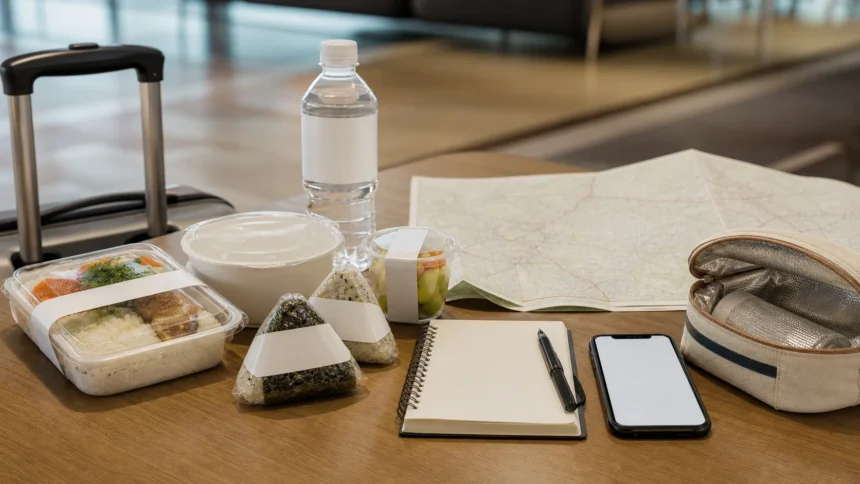
| Early train morning | Buy shelf-stable or ready-to-eat food the night before | Station shops may not be open before your train. | Storage, breakfast timing, drink, utensils, and where you can eat. |
| Long-distance shinkansen or limited express | Ekiben or station bento | JNTO says eating is generally allowed on shinkansen and long-distance trains. | Train type, smell, leakage, rubbish, dietary needs, and platform time. |
| Local train or subway day | Eat before boarding or after arrival | JNTO says eating on local or subway trains is generally considered impolite and should be avoided. | Station exit, transfer time, crowding, and seating near the route. |
| Rainy or very hot city day | Depachika, station food, hotel cafe, or indoor food hall | JNTO notes depachika are often connected to stations and useful on rainy days. | Where to eat, shop hours, crowds, refrigeration, and luggage. |
| Rural or small-town day | Prechecked restaurant plus packaged backup | JNTO FAQ notes rural and small local shops may have less English support. | Opening days, last order, cash, transport back, and dietary communication. |
| Strict-diet day | Confirmed restaurant plus known-safe packaged backup | One unclear meal can break the day. | Labels, reservation confirmation, halal/vegan/allergy boundaries, and storage. |
| Group day | Food hall, family restaurant, hotel meal, or prebooked venue | Groups split by budget, pace, drink preference, or dietary needs. | Seat availability, payment, time limits, shared plates, and separate checks. |
The four tests for a good backup
- Route fit: it is near the route you already have, not a detour that creates a new problem.
- Eating-location fit: you know where the food can be eaten: hotel, train, designated seating, park, food court, or restaurant table.
- Storage fit: the food can survive the time, heat, train ride, or hotel-room situation.
- Dietary fit: allergies, vegetarian, vegan, halal, no-pork, no-alcohol, or other strict needs are checked enough for the traveler.
Convenience stores are useful, not magic
Convenience stores are excellent for breakfast, late arrivals, drinks, snacks, simple meals, and disruption days. They are less useful when you need seating, a microwave, a strict diet, a full dinner, or a calm group meal. Use the Japanese Convenience Store Food Guide before depending on one meal to solve everything.
Ekiben and train food
JNTO describes ekiben as station bento for train journeys and notes that many travelers enjoy them on long-distance trains. Larger stations often have more choices. Local trains and subways are different; eating there is generally considered impolite and should be avoided.
For the full workflow, read Ekiben Guide for Japan Train Travel. For strict diets, do not assume ekiben is easy: JNTO notes vegetarian, vegan, and gluten-free ekiben can be challenging.
Depachika and indoor food halls
Depachika can be a strong rainy-day or station-area backup. JNTO describes them as department-store basement food floors, often connected to stations, with prepared bento, sweets, and food to go. The weak point is eating location. You may be buying takeout, not a seat.
Use Depachika Food Halls in Japan when the backup is an indoor food-floor plan.
Strict diets need two backups
If allergies, vegetarian, vegan, halal, no-pork, no-alcohol, or other strict needs matter, one backup may not be enough. Keep one confirmed meal and one packaged or route-based fallback that matches the person’s standard. Use How to Book Restaurants in Japan with Allergies, Vegetarian, Vegan, or Halal Needs before relying on a reservation request.
For labels, use Japanese Ingredient Labels for Travelers. For allergy safety, use Japan Food Allergy Guide for Travelers. For vegetarian/vegan and halal planning, use the dedicated guides rather than guessing from appearance.
Common mistakes
- Planning a famous restaurant immediately after a long arrival or train day.
- Buying takeout before deciding where to eat it.
- Assuming station shops are open before an early train.
- Trying to eat messy food on a crowded local train.
- Depending on one unclear label for a strict diet.
- Forgetting cash, luggage, rubbish, weather, or last-order timing.
FAQ
What is the safest food backup for a first night in Japan?
Usually a simple hotel-area option: convenience store, supermarket, hotel cafe, family restaurant, or prechecked casual restaurant. Avoid a tight reservation after a long flight unless it is flexible and close.
Can I eat on trains in Japan?
Long-distance trains such as shinkansen and limited express services are generally suitable for food such as ekiben. Local and subway trains are different; eating is generally considered impolite and should be avoided.
Are depachika good backup meals?
Yes, especially on rainy days or station-area routes, but decide where you will eat before buying. Many items are takeout.
What if I have an allergy or strict diet?
Use two backups: one confirmed restaurant or hotel plan and one packaged or route-based fallback that you can verify. Do not depend on appearance, English menu titles, or old lists.
Related guides
For the parent practical map, use Practical Food Guides in Japan. For convenience stores, read Japanese Convenience Store Food Guide. For ekiben, read Ekiben Guide for Japan Train Travel. For depachika, read Depachika Food Halls in Japan.
Sources
- JNTO: Traveling by Rail
- JNTO: Shinkansen
- JNTO: Experience Japan’s Local Ekiben Culture
- JNTO: Your Guide to Japanese Department Store Food Floors
- JNTO: FAQ
Editorial disclosure: This guide is independent. It does not rank restaurants, guarantee shop hours, certify diet suitability, provide allergy safety, or replace current route and venue checks.