Plan Oshima Park as one flexible nature day
Short answer: Oshima Park is not just one stop. It can be an easy camellia-and-zoo visit, a seasonal flower morning, a coastal walking day, or a base for Umi no Furusato Mura. Choose the size of the plan after checking ferry operation, the active port, Oshima Bus timing, weather, trail status, and seasonal bloom information.
Last checked: August 27, 2026. Park hours, zoo details, bloom status, trail access, bus timetables, ferry ports, shuttles, and closures can change. Confirm current information with official park, bus, ferry, and local sources before travel.
Why this area matters
The Tokyo Metropolitan Government’s English Oshima Park page describes the park as part of Fuji-Hakone-Izu National Park. It says Oshima Park uses the island’s natural environment, including coastlines and evergreen forests, and is divided into a main Oshima Park area with a zoo and camellia garden and a Goze River area that includes Umi no Furusato Mura.
This is why the area works well as a traveler hub. You can scale it from a gentle flower-and-zoo stop to a longer coast-and-forest walk without treating every bus stop as a separate article.
Choose your route size
| Plan size | Best for | Watch point |
|---|---|---|
| Easy park stop | Camellia garden, Camellia Museum, zoo, short rest, and simple bus access. | Check current opening information and return bus timing. |
| Camellia-focused visit | Winter to spring visitors who want varieties, flower color, leaf forms, and island camellia culture. | Bloom timing changes each year; check official flowering information. |
| Coastal trail day | Walkers who want Senzu coast, Shiofuki, Kasamatsu plants, forest, and Gyoja-side scenery. | Needs weather, footwear, daylight, and an exit plan. |
| Umi no Furusato Mura base | Travelers staying longer in the Goze River area or combining nature study paths with lodging or camping checks. | Confirm facility operation, shuttle rules, and bus options directly. |
Camellias and the museum
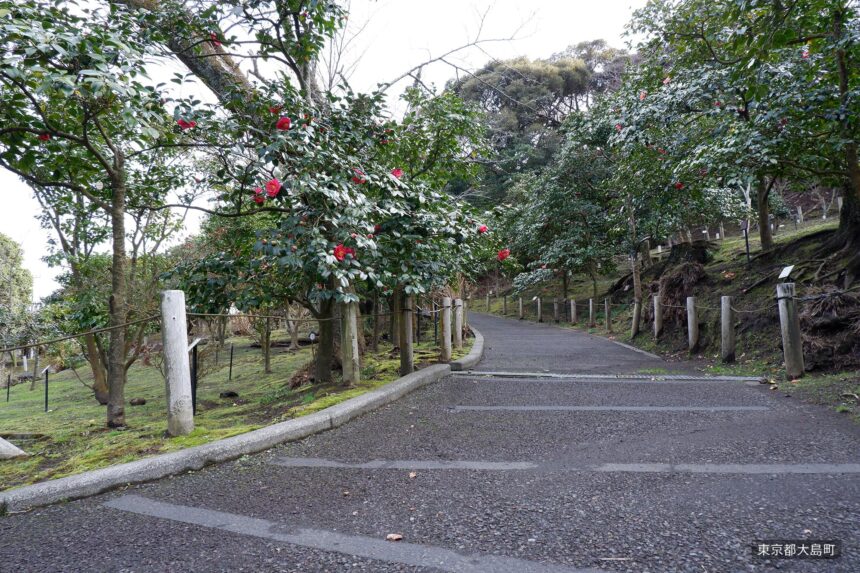
The official Tokyo Oshima Subprefecture camellia page says the garden developed from about 100 varieties and later became a large garden with about 1,000 cultivated varieties, 3,200 cultivated plants, and about 5,000 wild camellias. It also says the bloom period runs from November to April, with especially good viewing in February and March.
The same page describes the Camellia Museum as open year-round with free admission and exhibitions about camellias. For English-speaking visitors, the best approach is to treat the garden as a visual and botanical experience, then use the museum to understand why camellias are part of the island’s identity.
Zoo and easy nature
The official Oshima Park zoo page says the zoo uses natural scenery such as lava formed by past eruptions, camellia and Castanopsis forest, and southern-style planting. It also says the zoo keeps about 60 species and 400 animals, and describes a large walk-in bird cage using Oshima’s natural forest.
This makes the zoo a good pairing with the camellia garden, especially for families or travelers who need a gentler day after ferry travel. Check current hours and facility notices before going, because the value of this article is route planning, not guessing today’s operating status.
Coastal trail and Senzu choices
The official hiking course page says the Senzu coastline trail runs about 5.5 km from Senzu Ninomatsu to Gyoja Tunnel and can take about 2 to 3 hours if walked fully. It also notes that walkers can return to the island road and use buses for some sections.
Along the route, official descriptions point to Shiofuki, Kasamatsu’s seaside plant community, forest sections, Gyoja Beach, Memezu Beach, and a 2 km nature study path. Do not make this a last-bus gamble. Choose a shorter section if heat, rain, wind, footwear, or return transport is uncertain.
No-car planning
No-car visitors should start with the active ferry port and the current Oshima Bus timetable. The park page says access from Oshima is by bus from the airport or harbor to the Oshima Park bus stop. That is simple in concept, but island schedules still need exact-date checking.
If the bus plan is tight, choose the park area first and skip the full coastal trail. If weather is excellent and return timing is comfortable, then add Senzu coast, Shiofuki, or a nature-study section.
Safety and manners
- Wear walking shoes for coastal or forest routes.
- Watch heat, wind, wet paths, and cliff or rockfall cautions.
- Do not enter closed trails, caves, shorelines, or marked-off areas.
- Check bloom information instead of assuming peak camellia conditions.
- Keep enough time for the return bus, ferry port transfer, or taxi call.
Related Oshima guides
- Izu Oshima Travel Guide for First-Time Visitors
- Izu Oshima by Bus Guide
- Mount Mihara and Ura-Sabaku Guide
- Izu Oshima Onsen and Easy Recovery Stops
Photo credit
Featured image: camellia flower on Izu Oshima, from Izu Oshima Photo Studio, operated by Tokyo Oshima Town. The image is used under the site’s published terms, which allow edited commercial website use subject to restrictions. Cropping or resizing may be applied for site display. Use here does not imply endorsement by Tokyo Oshima Town, Izu Oshima Photo Studio, Tokyo Metropolitan Government, Oshima Park, Oshima Bus, Tokai Kisen, or any facility.
Sources
- Tokyo Metropolitan Government Bureau of Environment: Oshima Park
- Tokyo Metropolitan Oshima Subprefecture: Camellia Garden and Museum
- Tokyo Metropolitan Oshima Subprefecture: hiking courses
- Tokyo Metropolitan Oshima Subprefecture: Oshima Park Zoo
- Oshima Bus route bus page
- Tokai Kisen operation status
- Izu Oshima Photo Studio image page and terms
Editorial disclosure: This is an independent travel-planning guide. It is not affiliated with Tokyo Metropolitan Government, Oshima Park, Oshima Town, Tokyo Oshima Town, Izu Oshima Photo Studio, Oshima Bus, Tokai Kisen, or any facility.