Use the overnight ferry when the whole island plan can absorb uncertainty
Short answer: Tokai Kisen overnight ferries can be a practical and memorable way to reach Miyakejima, Mikurashima, and Hachijojima from Tokyo, but they are not just a cheap hotel on the sea. Your real plan has to include boarding at Takeshiba, cabin choice, baggage, early arrival, island-side transfers, return-day timing, weather, and official operation checks.
Last checked: August 28, 2026 JST. Timetables, fares, ship assignment, cabin availability, boarding rules, baggage rules, operation status, arrival ports, return ports, and weather decisions can change. Confirm current details with Tokai Kisen, official Tokyo island sources, local tourism or municipal pages, and JMA before travel.
What this guide covers
This guide combines the old one-route ferry pages for Tokyo to Miyakejima, Tokyo to Mikurashima, Tokyo to Hachijojima, and the matching return routes. The better traveler question is not “which page matches my exact direction?” It is “can I build an overnight sea route with enough buffer if the ship, port, or weather changes?”
| Island route | Why it works | What can break the plan |
|---|---|---|
| Miyakejima | Good for travelers who can handle an early island arrival and port-choice planning. | The ship may use different ports depending on sea conditions, so local transfer planning matters. |
| Mikurashima | Useful when lodging and activity timing are already arranged around the ferry. | Berthing risk and limited local transport make tight plans fragile. |
| Hachijojima | Works for longer island stays where the sea journey is part of the experience. | Return timing, airport comparison, weather, and next-day commitments need a buffer. |
Start with Tokai Kisen, then check the island side
Tokai Kisen’s English site provides the main public entry points for timetable, reservations, route and ship guide, baggage, boarding terminal guide, and cancellation rules. Its operation-status page lists island-by-island service information, including Miyakejima, Mikurashima, and Hachijojima. On the checked page, large-passenger-ship information is updated after 09:00 and final decisions are planned around 17:00, so refresh and confirm the current page before acting on it.
Do not save an old timetable screenshot and treat it as the plan. Use the official timetable and fare page when choosing the route, then use the official operation-status page again before leaving for Takeshiba and before leaving the island.
Takeshiba boarding is only the first decision
The mainland side is comparatively simple: get to the correct Tokyo boarding terminal, leave time for ticketing and boarding, and follow the latest Tokai Kisen instructions. The harder part is what happens after the ship reaches the island. A 05:00 or 06:00 arrival can be awkward if lodging, buses, taxis, rental cars, or food are not ready.
Miyakejima Tourism Association’s FAQ says there is no public rest space after early-morning ship arrival and recommends arranging lodging in advance if you need early access to a room. That is exactly the kind of local detail that matters more than memorizing an old arrival time.
Miyakejima needs port-choice planning
Miyakejima has multiple ferry ports, and official local guidance explains that the ship’s port can depend on sea conditions. UMISORA lists Miike, Igaya, and Sabigahama / Ako as the three Miyakejima ports, and Miyakejima Tourism Association’s FAQ explains that the Tokyo-bound port is decided on the day on the checked page.
Build the day so you can move to the confirmed port. If you need a taxi, rental car return, lodging pickup, or checked baggage timing, treat the port decision as the center of the day.
Mikurashima is not a casual tight-connection island
Mikurashima is beautiful, but the ferry plan deserves caution. A small-island port can be affected by sea conditions, and local transport options are limited compared with large tourist cities. If your visit depends on a dolphin tour, lodging checkout, or a same-day return to Tokyo, confirm the latest operation status and keep a backup night in mind.
Hachijojima gives more room, but still needs a return buffer
Hachijojima is usually easier to plan than the smallest island ports because it has broader transport options, including air service. That does not make a same-day high-stakes connection safe. Compare the overnight ferry, return ferry, and flight options with current official information, then add a buffer before international flights, prepaid events, or work commitments.
Practical checklist
- Use Tokai Kisen official pages for timetable, fares, reservation, boarding, baggage, cancellation, and operation status.
- Check JMA warnings and tropical cyclone information when wind, rain, or typhoons may affect the islands.
- Reserve lodging with early-arrival or late-checkout logic in mind.
- Keep luggage manageable, especially when the island-side transfer is uncertain.
- Do not plan a ferry return as the same-day connection to an international flight.
Related guides
- Japan Transport Fan Travel Guide
- Izu Oshima Ferry Guide
- Tokyo Ai-Land Shuttle and Heliport Guide
- Chofu Island Flights Guide
Photo credit
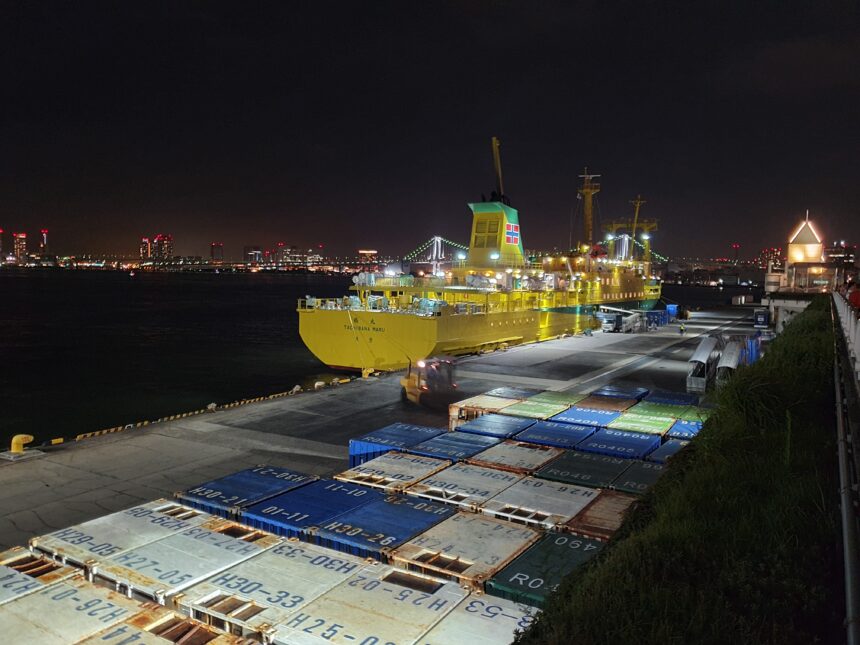
Featured image: Tachibana Maru at Takeshiba Pier by Syced via Wikimedia Commons, made available under CC0 1.0. Cropping or resizing may be applied for site display. Use here does not imply endorsement by the creator, Wikimedia, Tokai Kisen, Tokyo Metropolitan Government, island municipalities, tourism organizations, ferry operators, or public agencies.
Sources
- Tokai Kisen English site
- Tokai Kisen operation status
- Destination Tokyo Islands access
- GO TOKYO: Going to Islands
- UMISORA Miyakejima access
- Miyakejima Tourism Association access
- Miyakejima Tourism Association FAQ
- JMA weather warnings
- JMA tropical cyclone information
- Wikimedia Commons image page
Editorial disclosure: This is an independent travel-planning guide. It is not affiliated with Tokai Kisen, Tokyo Metropolitan Government, JMA, island municipalities, local tourism organizations, ferry operators, Wikimedia, or the image creator.