Use the Tokyo Ai-Land Shuttle as transport, not as a casual attraction
Short answer: Tokyo Ai-Land Shuttle can be one of the most memorable transport experiences in the Tokyo islands, but it is a small-seat island service where weather, baggage, booking timing, and transfer planning matter. Treat it as a practical route tool first and an aviation highlight second.
Last checked: August 27, 2026. Timetables, fares, reservation windows, check-in rules, baggage charges, aircraft assignment, heliport access, transfer options, and operation status can change. Confirm current details with Tokyo Ai-Land Shuttle, Toho Air Service, Tokyo Metropolitan Government, island municipal sources, and JMA before travel.
What the shuttle connects
Tokyo Ai-Land Shuttle is operated by Toho Air Service as a commuter helicopter service among the Tokyo islands. On the checked official pages, the route network links Hachijojima, Aogashima, Mikurashima, Miyakejima, Oshima, and Toshima, with route legs shown in a daily operating pattern. The operator’s corporate site describes the service as connecting six Tokyo islands with 10 daily flights.
For visitors, the important point is route shape. The shuttle is not a simple Tokyo city sightseeing flight. It is useful when it solves an island-to-island connection, especially where ferry timing, sea conditions, or overnight buffers make a trip difficult.
Best use cases
| Use case | Why it can work | Check first |
|---|---|---|
| Hachijojima to Aogashima | The helicopter can be the cleanest way to reach or leave Aogashima when seats and weather line up. | Operation status, ferry backup, same-day connection risk, and return buffer. |
| Mikurashima and Miyakejima | The shuttle can reduce difficult sea-link planning between neighboring islands. | Heliport counter, local transport, lodging, and weather warnings. |
| Oshima and Toshima | The route can support a wider island chain plan, but ferry options may be more practical for many travelers. | Tokai Kisen ferry status, shuttle seat availability, and baggage limit. |
| Aviation-focused itinerary | The flight itself may be the highlight if it fits a real route. | Official timetable, current aircraft information, public-area rules, and cancellation risk. |
Booking and payment planning
The official Tokyo Ai-Land Shuttle pages include online reservation and reservation lookup tools. On the checked fare page, reservations are described as available from one month before the boarding date until the day before boarding, with reservation-center handling excluding Sundays. The boarding-information page explains the flow from reservation to payment and lists payment choices including local counter payment, convenience-store payment, Pay-easy, and online credit card payment.
Because this is a small-seat route, do not leave it as an optional same-day idea. Decide whether the shuttle is essential to the trip, then build the island plan around confirmed seats, official operation status, and a backup plan.
Baggage is part of the route decision
On the checked official fare page, excess baggage charges apply above 5 kg, with fractions under 1 kg rounded up for charging. That is a very different planning environment from a large domestic jet flight. Pack as if the helicopter segment is the tightest part of the route.
- Use a small soft bag when possible.
- Confirm baggage rules before booking, especially for cameras, tripods, dive gear, camping gear, or bulky luggage.
- Avoid creating an itinerary that depends on oversized luggage being accepted without prior confirmation.
Check-in, weather, and backup routes
The checked timetable page shows boarding procedures tied to each flight and states that boarding procedures should be completed from 50 minutes to 30 minutes before departure. Treat that as a current-check item, not a permanent promise. Small-island aviation is sensitive to weather, visibility, wind, operational decisions, and aircraft assignment.
Before travel, check the shuttle operation page, JMA weather warnings, JMA tropical cyclone information, and ferry operation status. If the helicopter segment is the only way to reach a prepaid hotel, a ferry, or an international flight connection, add an overnight buffer.
Heliport manners for aviation fans
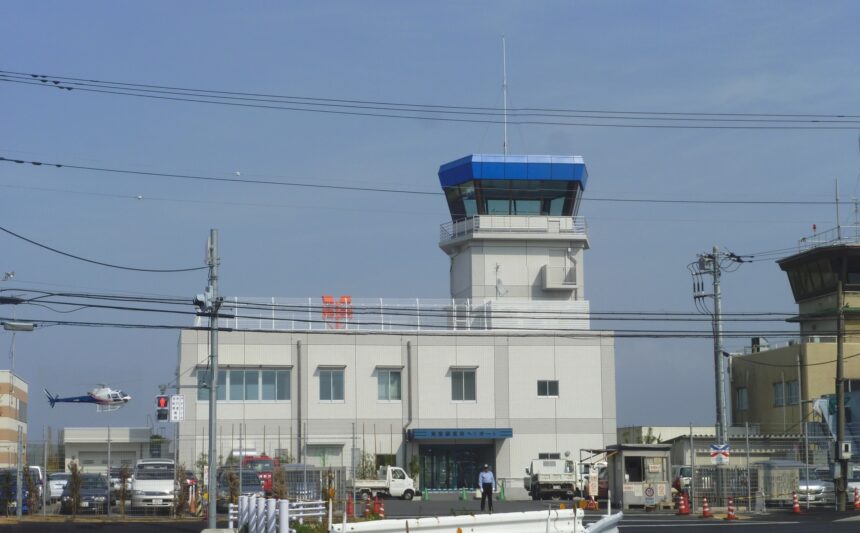
Tokyo Heliport and the island heliports are working transport and public-safety environments. Tokyo Metropolitan Government describes Tokyo Heliport as infrastructure used by public agencies, emergency services, reporting, sightseeing, and other helicopter activity. Its official information page also states that general parking is not available there.
Use only official counters, signed passenger areas, public roads, and public viewpoints. Do not photograph from restricted areas, staff-only spaces, fence lines that obstruct work, private property, or roads where stopping creates nuisance or risk. On small islands, a quiet and respectful passenger is remembered in a good way.
How to decide if it belongs in your trip
- Use the shuttle when it solves a real island connection.
- Skip it when the whole day becomes fragile around one small-seat flight.
- Use ferry routes as backup where they exist, but remember that sea conditions can also disrupt ferries.
- Keep one extra night before high-stakes onward travel.
- Check official pages again the day before and the morning of travel.
Related guides
- Japan Transport Fan Travel Guide
- Japan Island and Remote Airports Guide for Aviation Fans
- Chofu Aerodrome Area Guide for Aviation Fans
- Izu Oshima Ferry Guide
- Izu Oshima Travel Guide for First-Time Visitors
Photo credit
Featured image: Tokyo Heliport 2011 sunny by Nesnad via Wikimedia Commons, licensed under CC BY-SA 3.0. Cropping or resizing may be applied for site display. Use here does not imply endorsement by the creator, Wikimedia, Tokyo Heliport, Tokyo Metropolitan Government, Toho Air Service, Tokyo Ai-Land Shuttle, island municipalities, tourism organizations, or transport providers.
Sources
- Tokyo Ai-Land Shuttle reservation and operation portal
- Tokyo Ai-Land Shuttle timetable
- Tokyo Ai-Land Shuttle fares and baggage charges
- Tokyo Ai-Land Shuttle boarding information
- Tokyo Ai-Land Shuttle fleet page
- Tokyo Ai-Land Shuttle heliport guide
- Toho Air Service official site
- Tokyo Metropolitan Government: Tokyo Heliport information
- Tokyo Metropolitan Government: Tokyo Heliport role and noise measures
- JMA weather warnings
- JMA tropical cyclone information
- Wikimedia Commons image page
Editorial disclosure: This is an independent travel-planning guide. It is not affiliated with Toho Air Service, Tokyo Ai-Land Shuttle, Tokyo Metropolitan Government, JMA, island municipalities, airport or heliport operators, ferry operators, tourism organizations, Wikimedia, or the image creator.