Island airports need backup thinking
Short answer: Japan’s island and remote airports are fascinating for aviation fans, but they are not normal city-airport detours. Weather, ferry backup, limited buses, taxi availability, rental-car supply, baggage, and overnight buffers matter more than terminal size. Choose an island airport when it fits the island trip, not only because the airport looks interesting.
Last checked: August 27, 2026. Flights, ferry operations, route availability, baggage rules, ground transport, airport facilities, weather warnings, typhoon information, and observation areas can change. Confirm current details with official airport, airline, ferry, local government, and JMA sources before travel.
How to group the airports
| Airport family | Examples in this guide | Best planning question |
|---|---|---|
| Large island gateways | Amami, Ishigaki, Shimojishima | Does the airport support the island route, or is it only an arrival point? |
| Kagoshima island chain | Yakushima, Tanegashima, Kikai, Tokunoshima, Okinoerabu, Yoron | What happens if weather delays the flight or ferry? |
| Goto / border-island routes | Fukue, Tsushima, Iki | Is the airport, ferry, or city transfer the most reliable spine of the trip? |
| Tokyo island airports | Hachijojima, Oshima, Niijima, Kozushima, Miyakejima | How do flights, Tokai Kisen ferries, local buses, taxis, and lodging buffers work together? |
Start with weather, not the terminal
Island airports can be beautiful precisely because they sit close to sea, mountains, cliffs, reefs, or volcanic landscapes. That also makes weather a real planning factor. JMA provides weather warnings and tropical cyclone information, and those checks should sit next to airline and ferry operation status in your planning.
Do not build a tight same-day chain that depends on every flight, bus, rental-car pickup, and ferry working perfectly. If the island is remote, give yourself more slack than you would for Tokyo, Osaka, or Fukuoka.
Good island-airport choices
Amami is a useful example of a larger island gateway. Its official airport page lists facilities such as service hours, a lounge, wheelchairs and strollers, free Wi-Fi, pet-carrier handling notes, dining, and shops. Its access page states that the airport is about 30 km from downtown Naze and about 50 minutes by car. That tells you the airport is useful, but not automatically central.
Ishigaki is another strong aviation stop because the official observation-deck page describes runway, sea, and mountain views from the domestic rooftop south-side deck. For Shimojishima, the route appeal is different: the island-airport setting itself is the attraction, but flight timing and ground transport still decide whether it belongs in the itinerary.
Where backup planning matters most
Yakushima, Tanegashima, Kikai, Tokunoshima, Okinoerabu, Yoron, Fukue, Tsushima, and Iki can all be interesting, but they should not be treated like big-city airport stops. Check airline operation status, ferry alternatives where available, lodging cancellation rules, and local buses or rental cars before committing.
The Tokyo island airports are even more dependent on the whole route. Oshima, Niijima, Kozushima, Miyakejima, and Hachijojima can involve Chofu flights, Tokai Kisen ferries, ferry-port changes, and limited island transport. Use the dedicated Oshima and ferry guides when Oshima is part of the plan.
A simple decision rule
- Choose the island airport if it saves a night, avoids a difficult ferry, or gives you an aviation experience that fits the island plan.
- Choose the ferry if baggage, cost, schedule, or backup-day planning makes the sea route easier.
- Choose an overnight buffer if missing the last bus, ferry, or rental-car pickup would break the trip.
- Skip the airport detour if it adds uncertainty without adding a real island experience.
Related guides
- Japan Transport Fan Travel Guide
- Japan Airports Guide and Nearby Travel Ideas
- Japan Regional Airports Guide for Aviation Fans
- Chofu Aerodrome Area Guide for Aviation Fans
- Izu Oshima Ferry Guide
- Izu Oshima Travel Guide for First-Time Visitors
Photo credit
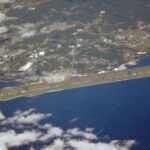
Featured image: Amami Airport 20180428 by Suikotei via Wikimedia Commons, licensed under CC BY-SA 4.0. Cropping or resizing may be applied for site display. Use here does not imply endorsement by the creator, Wikimedia, Amami Airport, airport operators, airlines, ferry operators, local governments, tourism organizations, or transport providers.
Sources
- MLIT: airport list
- Amami Airport facilities
- Amami Airport access
- Ishigaki Airport observation deck
- JMA weather warnings and advisories
- JMA tropical cyclone information
- Tokyo Metropolitan Government: Chofu Aerodrome
- New Central Airservice
- Tokai Kisen operation status
- Wikimedia Commons image page
Editorial disclosure: This is an independent travel-planning guide. It is not affiliated with MLIT, JMA, airport operators, airlines, ferry operators, local governments, tourism organizations, Wikimedia, or the image creator.